

Electric Magnetic Lock Singapore: Force & Wiring
An electric magnetic lock in Singapore is the most common lock on an access control door, and the most misunderstood. MarketsandMarkets values the Asia Pacific access control sector at 3.11 billion US dollars in 2025. This blog walks you through holding force sizing, fail-safe wiring, residual magnetism, and glass-door mounting, so you can specify a maglock that holds and releases as part of an integrated security setup.
What is an electric magnetic lock, and how does it work?
An electric magnetic lock, or maglock, secures a door using an electromagnet rather than a bolt or latch. Two parts do the work. An electromagnet mounts on the door frame, and a steel armature plate mounts on the door, so when current energises the magnet, it bonds to the plate and holds the door shut.
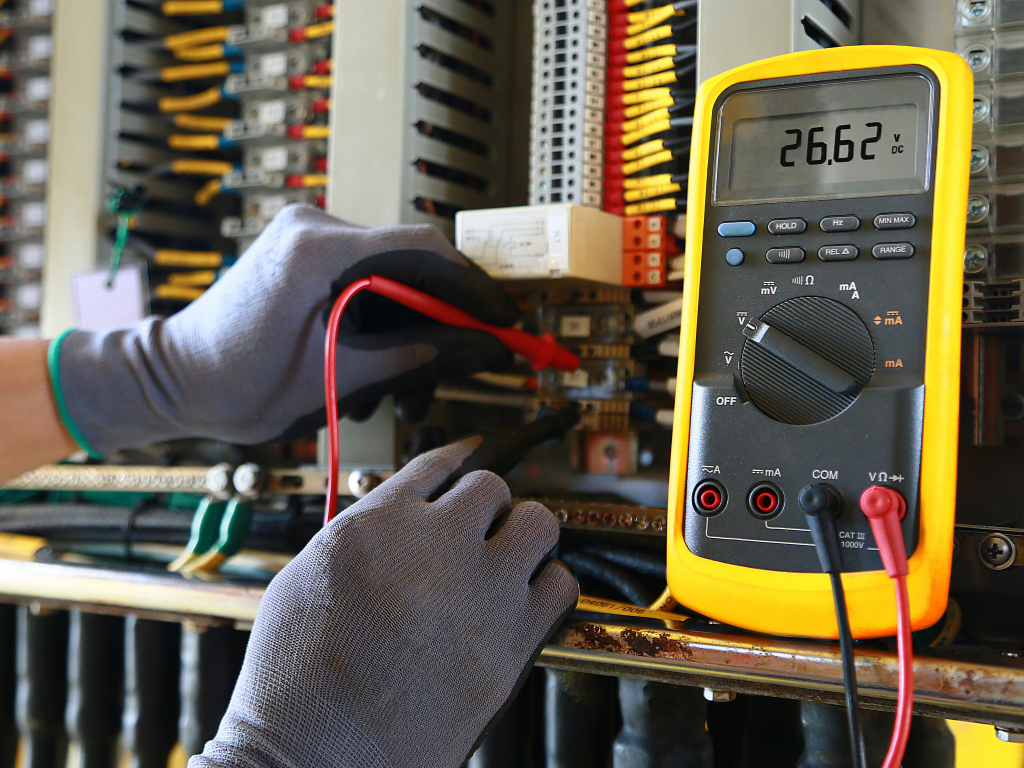
The design has no moving parts, which is why a maglock outlasts a mechanical latch that wears with every cycle. The bond holds only while power flows, so cutting power from an exit button, a card reader, or a fire alarm releases the door instantly. A standard commercial unit runs on 12 or 24 volts DC and draws roughly 480 milliamps at full holding force, which is why underpowering the lock weakens its grip. An LED on the lock body shows status at a glance, and dry-contact outputs report door and lock state back to the access controller.
How much holding force do you need: 600lb, 1200lb, or more?
Match holding force to the door and the threat, and for most single commercial doors that means 1,200 lbs (545 kg). Holding force is the pull the magnet resists before the bond breaks, and it is the first number to specify.
The tiers are standardised across the industry. A 600 lb (272 kg) maglock suits low-security interior doors and light traffic control, a 1,200 lb (545 kg) lock is the working standard for a single commercial entrance, and heavy-duty models reach 2,000 to 5,000 lbs for perimeter and high-abuse openings. A double door usually needs a pair of surface locks or a shear lock rather than one unit. On a frameless glass door, a 1,200 lb lock is a sensible ceiling, because the laminated glass panel fails under attack before the magnetic bond releases. Quality locks are tested to ANSI/BHMA A156.23 and carry UL 294 listing for access control, and specifying those marks separates a rated lock from an untested import.

Why are maglocks always fail-safe, and what does that mean?
A maglock is fail-safe by design, meaning it unlocks the instant power is lost, and it cannot be made fail-secure. The magnetic bond exists only while current flows, so any power interruption releases the door. As Allegion’s Decoded hardware guidance states, “Electromagnetic locks are only available fail safe.”
This is a feature, not a flaw, for a door on an escape route, where occupants must be able to leave during a fire or blackout. It becomes a security consideration on a door protecting stock or data, because a power cut leaves that door open. The rule most Singapore installers follow is to specify maglocks on egress paths and lobby doors, and to choose a fail-secure electric strike or bolt where a door must stay locked through an outage. Designing a maglock onto a server-room door without a plan for power loss is a security gap waiting to open.
How do you wire a maglock for fail-safe egress in Singapore?
Wire the maglock so its power runs through both the access controller and the building fire alarm, so any release path drops the door open. Under the SCDF Code of Practice for Fire Precautions in Buildings 2023, an electromagnetic lock on an escape route is defined as a fail-safe device that must release automatically. The SCDF Fire Code definition requires the lock to unlock on fire alarm activation, power failure, or any fault.
The compliant wiring chain is specific. The access controller energises the lock and de-energises it on a valid card read or an exit button press, while a request-to-exit sensor covers automatic egress. The lock power also routes through the fire alarm control panel relay, so an alarm cuts power directly and no building management system delays the release. Singapore code requires a manual override, usually a break-glass unit, mounted 1.2 metres above the floor and within 1.5 metres of the door jamb. Tie the lock into the wider access control readers so entry, exit, and alarm events log to one platform. Skip the direct fire-alarm link and the door fails inspection before it protects anyone.
What is residual magnetism, and does it trap the door?
Residual magnetism is the faint magnetic pull that can linger after a maglock de-energises, holding the door slightly stuck for a moment. On a cheap lock this delays egress, which is exactly the wrong behaviour on an escape door.
A quality maglock solves this at the hardware level with an anti-residual magnetism design, sometimes a kick-off circuit or a mechanical spacer, so the door functions normally the instant power drops. The armature plate on a properly engineered lock separates cleanly with no measurable residual hold. This is worth checking on the datasheet, because an unbranded import that omits anti-residual design will occasionally leave a fire door jammed for a second or two under load. In practice, insist on a lock that specifies no residual magnetism, since that single line separates a life-safety-grade unit from a gate-latch clone.
How is the armature plate mounted correctly?
Mount the armature plate so it can float, not rigidly, because a plate bolted down tight cannot seat flush against the electromagnet and loses holding force. The plate attaches through a central bolt with a rubber washer and sex nut that lets it pivot a few degrees to meet the magnet face square.
Alignment is where most maglock faults start. The contact surfaces of the electromagnet and armature must be clean, rust-free, and parallel, and a plate installed too tight is the most common cause of a weak bond. Manufacturers ship a drilling template precisely because a few millimetres of misalignment cuts the effective holding force. The rubber washer stays in place and undamaged, letting the plate self-align each time the door closes. Skip the floating mount and a 1,200 lb lock behaves like a 600 lb one, which is a specification failure disguised as a hardware problem.
Can you fit a maglock on a glass door?
Yes, with the correct bracket. A frameless glass door takes a U-bracket that clamps the armature plate to the glass panel without needing a timber or metal frame, and a glass-mount electromagnet fixed to the header.
The bracket choice follows the door geometry. An L-bracket carries the lock body on an inswinging door, a Z-bracket or a combined ZL-bracket handles frame mounting, and a U-bracket is the glass-door solution for a storefront or office partition. Frameless glass needs precise alignment and a small clearance, typically a quarter to half an inch, so the plate seats without stressing the glass through thermal expansion. Herculite and tempered storefront doors are the common Singapore case, and pairing a 1,200 lb lock with laminated glass gives a bond stronger than the panel itself. The glass shatters before the magnet lets go, which is the honest limit of any glass-door lock.
Does a maglock need a backup battery?
A maglock needs a backup battery on any door where a brief mains interruption should not swing the door open. Because a maglock is fail-safe, it releases the moment power stops, so a battery-backed power supply keeps it energised and locked through a short outage while still allowing the fire alarm to release it.
The backup sits in the power supply, not the lock. A standard access control power supply with a 12 volt sealed battery holds the maglock and the controller through a mains blip, and it is sized to the total current draw of every lock on the circuit. On an escape door the design still routes fire-alarm release ahead of the battery, so life safety always wins over security. Pairing the lock with CCTV surveillance and door-status monitoring means a forced or propped door raises an alert rather than passing unseen. Size the battery to the load, not to a guess, or the lock drops out mid-outage.
How do you choose and install a maglock in Singapore?
Judge a maglock specification against four things: holding force matched to the door, fail-safe wiring tied to the fire alarm, anti-residual magnetism, and the right bracket for the door type. A quote that lists a lock without stating its fire-alarm release plan is incomplete.
Ask for the holding force in pounds and the current draw in milliamps, so the power supply and battery are sized correctly. Confirm the lock carries UL 294 listing and specifies no residual magnetism, and check the bracket matches your glass, timber, or gate opening. The Asia Pacific access control market is projected to reach 5.13 billion US dollars by 2030 at a 10.5 percent annual rate, which is widening the gap between installers who wire to code and those who fit a lock and hope. Insist the wiring includes the break-glass override at the code-required height. A supplier offering the full range of entry hardware can match the lock, the controller, and the power supply as one design. When you are ready to specify, book a site assessment so each door gets the right lock and a compliant release.
Conclusion
An electric magnetic lock in Singapore comes down to two numbers and one wiring rule: the holding force that matches the door, the current draw that sizes the power supply, and a fail-safe release wired straight to the fire alarm with a break-glass override. Add anti-residual magnetism and the correct bracket, and the lock holds securely every day while releasing the instant it must.
Enforce Automatic Global specifies, supplies, installs, and maintains electric magnetic locks as part of an integrated access control setup across Singapore properties. Book a site assessment to size the holding force, plan the fail-safe wiring, and receive a maglock specification that is code-compliant and built for the door.
Frequently asked questions
How much does a maglock cost in Singapore?
Cost is driven by holding force, single or double door, glass or frame mounting, and whether the quote includes the power supply, battery backup, and break-glass override. A 600 lb single-door indoor lock sits at the low end, while a 1,200 lb glass-door installation with fail-safe wiring and monitoring sits higher. A site assessment fixes the specification before pricing.
Can a maglock be forced open?
A properly powered 1,200 lb (545 kg) maglock resists roughly 545 kilograms of direct pull, which exceeds what a person generates by shoulder force. The realistic failure point is the door or glass, not the magnet, or a lock left underpowered by an undersized supply. Door-status monitoring flags a forced or propped door immediately.
What voltage does an electric magnetic lock use?
Most maglocks run on 12 or 24 volts DC, selectable on many models, drawing around 480 milliamps at 12 volts for a 1,200 lb lock. Use 24 volts on long cable runs to avoid voltage drop, since an underpowered maglock loses holding force. A battery-backed power supply keeps the lock energised through a brief outage.
Is a maglock legal on a fire escape door in Singapore?
Yes, provided it is wired fail-safe to release automatically. The SCDF Fire Code 2023 requires an electromagnetic lock on an escape route to unlock on fire alarm, power failure, or fault, and to have a manual break-glass override mounted 1.2 metres above the floor within 1.5 metres of the door jamb.