

Video Intercom System Singapore: Condo & Office Entry
A video intercom system in Singapore is now the default door entry for condos and offices, replacing the audio buzzer. Mordor Intelligence values the global video intercom market at 51.79 billion US dollars in 2025, with Asia Pacific growing fastest. This blog walks you through the system types, the condo-versus-office split, mobile answering, door release, and PDPA rules, as part of a wider integrated security setup.
What is a video intercom system, and what does it include?
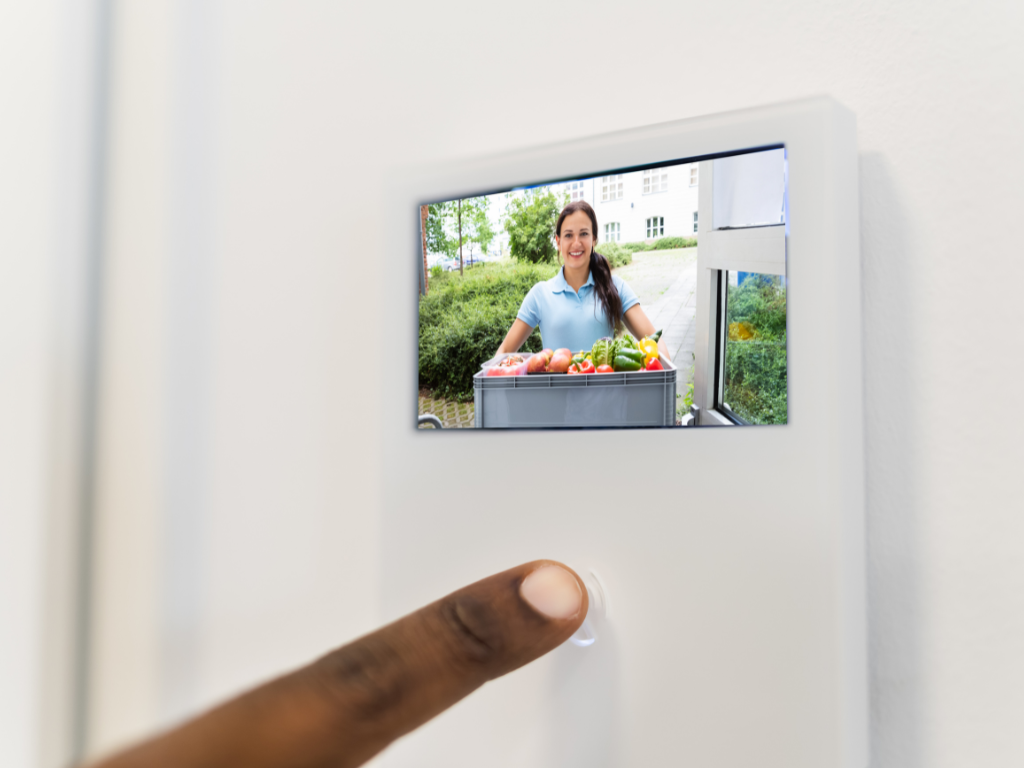
A video intercom system is a door entry setup that lets a person inside a building see, speak to, and remotely admit a visitor at the entrance. Four parts do the work. A door station at the entrance, an indoor monitor or mobile app that answers the call, a door release that unlocks the entry, and the cabling or network that ties them together.
The door station carries the camera, microphone, speaker, and call button, and it is the outdoor-rated part of the system. A door station for a Singapore exterior needs an IP65 or IP66 weather rating and an IK vandal rating to survive monsoon rain and tampering. The indoor answer point is either a wall monitor, typically a 7 to 10 inch touchscreen, or a smartphone app. The door release is a relay output that triggers an electric strike or a magnetic lock, so the intercom becomes the trigger for the access control and door release rather than a separate wired button.
What is the difference between audio and video intercom?
A video intercom adds a camera at the door station so the person answering can see the visitor before unlocking, while an audio intercom offers voice only. The security difference is not marginal, because visual verification stops a resident buzzing in a stranger who claimed to be a delivery driver.
Video door stations have become the default for a practical reason. A 2 megapixel colour camera with a wide-angle lens, infrared night vision, and two-way audio confirms who is at the door, verifies a package, and records the event for later review. Audio-only stations still earn a place in very large residential blocks with 50 or more units, where the per-station cost multiplies, but even there most new Singapore deployments specify video at the main entrance. The stance worth holding: for any condo lobby or office reception, audio-only is a false economy, since the whole point of door entry is knowing who you are admitting.
IP/SIP or 2-wire intercom: which should you install?
Install an IP intercom for any new building, and specify SIP where you need it to talk to phones and other systems. An IP intercom runs over standard Ethernet and Power over Ethernet, integrates with CCTV, access control, and mobile apps, and scales by software rather than by pulling new wire.
SIP, the Session Initiation Protocol standardised by the IETF as RFC 3261, is the open standard that lets a door station register with a VoIP phone system so calls ring desk phones, softphones, and mobiles like any other extension. As IP Security Depot’s technical buyer’s guide puts it, “IP is the standard for any new commercial deployment.” Proprietary IP platforms from Aiphone, 2N, or Comelit offer richer features but lock you into one vendor for the life of the system. A legacy 2-wire analog intercom still suits a small single-entry setup where simplicity beats integration, yet it cannot answer to a phone or log events to a browser. For a condo or an office that expects to grow, IP is the specification worth defending, and Mordor Intelligence reports IP-based systems already hold roughly 53 percent of the market as analog erodes.
How does a video intercom work for a condo versus an office?
The core hardware is the same; the topology and the answer path differ. A condo runs a multi-tenant system where a single lobby door station calls hundreds of individual units, while an office runs a single-tenant system where a few entrance stations route to a reception desk and staff phones.
A condo door station needs a directory that scales, since a single Aiphone IX platform supports up to 500 tenant stations in one building and 5,000 across a multi-building estate, plus guard-house monitors at the security post. The call from the lobby rings the resident’s indoor monitor and their phone, and the resident releases the lobby door and, on higher-end systems, the lift to their floor. An office setup is smaller but busier, routing the entrance call to a receptionist and forwarding to staff mobiles after hours. The cleaner design for a mixed-use building, ground-floor retail under residential floors, is one IP platform with role-based permissions rather than two separate systems, which is where cheap installs create a maintenance headache.
Can you answer the door from your phone?
Yes. Modern IP video intercoms forward the door call to a smartphone app on iOS and Android, so a resident away from home or a receptionist who has stepped out can see the visitor, speak, and release the door remotely. This is the single feature that pushed the market from wall monitors to hybrid answering.
The mechanism is straightforward. The door station sends a push notification with two-way audio and live video to the app, and the user taps to unlock. Cloud-connected platforms such as DoorBird, Akuvox, and 2N enable this over IP, and a SIP setup can ring a softphone on the same handset. Worth noting: check how many mobile users the licence includes, because some vendors cap it at 5 to 10 phones or charge per user, which quietly raises the cost on a large condo. The mobile path also depends on the network, so a resident with no data signal in a basement carpark falls back to the wall monitor.
How does the video intercom release the door?
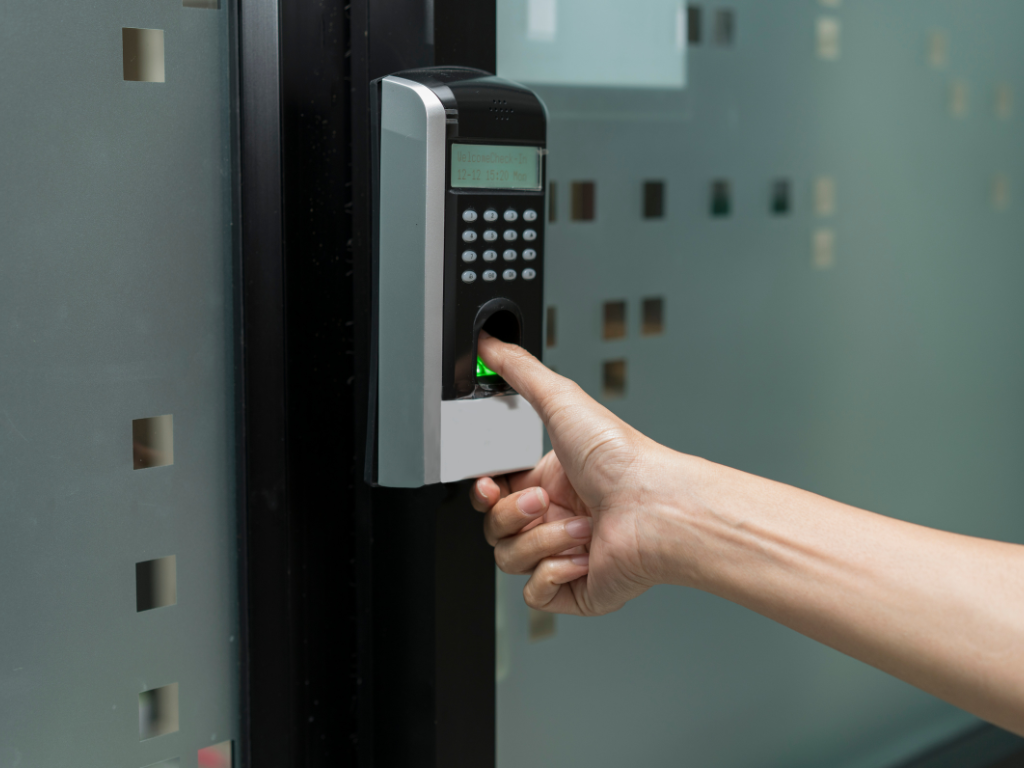
The door station releases the entry by sending a signal to an electric lock, either through its own relay or through a connected access control panel. This is where the intercom stops being a doorbell and becomes part of the building’s entry control.
The relay output is a dry contact rated for a specific current and voltage, wired to trigger an electric strike or a magnetic lock. The wiring logic, normally open or normally closed, must match the lock, and a fail-safe maglock on an escape route releases on a fire alarm regardless of the intercom. On a larger site, the intercom hands the release decision to the access control system so that door events, card swipes, and intercom calls all log to one platform. Pairing the intercom with CCTV surveillance means every entry is answered on video and recorded from a second angle, which is what turns an admitted visitor into a reviewable event.
Can you reuse existing 2-wire cabling for an IP intercom?
Often yes, and it is the cheapest way to modernise an older Singapore block. A 2-wire IP adapter converts existing intercom cabling to carry IP data, so you upgrade the door station and monitors without pulling new Cat6 through occupied units.
The retrofit has honest limits. It works only where the existing cable is in good condition and the run stays within roughly 150 metres, and a site survey by a qualified technician is mandatory before anyone assumes compatibility. The trade-off is that 2-wire IP does not always deliver the full bandwidth or PoE headroom of a fresh Cat6 run, so a large 4K multi-tenant deployment still justifies recabling. Mordor Intelligence expects 2-wire IP retrofits to grow at a 14.65 percent annual rate through 2030, precisely because they let older condos adopt IP without gutting the risers. For a heritage or occupied building, reusing the pair buys time; for a new fit-out, structured cabling is the right foundation.
Do video intercoms fall under PDPA in Singapore?
Yes. A video intercom that records or captures identifiable visitors handles personal data under Singapore’s Personal Data Protection Act 2012, so a condo or office running one carries the same obligations as any CCTV operator. The PDPC Advisory Guidelines require clear, visible notification that recording is in operation before a visitor reaches the door station.
Two obligations follow from treating the footage as personal data. The managing agent collects it only for the stated security and access purpose, and keeps it no longer than necessary, with common Singapore practice landing around 30 days. Individuals hold a right of access, so a visitor can request footage of themselves, and the MCST or building manager must respond within 30 days while masking other people in the frame. Cyber hygiene matters too, since an internet-connected door station is a network device; Hikvision achieved the IEC 62443-4-1 cybersecurity-by-design certification in February 2025, a benchmark worth asking any vendor to meet. Skip the signage and a working intercom still fails a PDPC complaint.
How do you choose a video intercom for a Singapore building?
Judge the specification against four things: the building type, the wiring you already have, the answer path residents actually want, and the door release integration. A vendor who quotes a door station before asking whether it is a condo or an office is guessing.
Ask whether the existing 2-wire cabling can carry the first phase, because that decides the budget. Confirm the door station’s IP and IK ratings for an exposed Singapore entrance, and check the mobile-user licence against your unit count. Insist the quote states how the intercom triggers the lock and whether it hands release to access control. A supplier offering the full entry management range can align the door station, the locks, and the cameras under one design. When you are ready to scope it, request a site survey so the system fits your building rather than a catalogue kit.
Conclusion
A video intercom in Singapore succeeds on three decisions: IP over legacy 2-wire for anything expected to last, an answer path that reaches both the wall monitor and the resident’s phone, and a door release wired into the building’s access control rather than bolted on. Handle the PDPA signage and the door station’s weather rating, and the system serves a condo or office for a decade instead of a warranty period.
Enforce Automatic Global designs, installs, and maintains video intercom and door entry as part of an integrated access setup across Singapore condos and offices. Request a site survey to map your entrances, answer paths, and lock integration, then receive a specification built for your building.
Frequently asked questions
How much does a video intercom system cost in Singapore?
Cost is driven by station count, resolution, whether it is IP or 2-wire, and the mobile-user licence. A single video door station with a 2 megapixel camera and two-way audio sits at the low end, while a multi-tenant condo system with guard-house monitors and hundreds of units sits far higher. A site survey fixes the station plan before pricing.
Does a video intercom work during a power or internet outage?
It depends on backup power, which is why a UPS on the network equipment is non-negotiable. An IP intercom relies on the building network, so a router failure stops mobile answering until it recovers, though a wired indoor monitor and the door release relay can keep working. Enforce specifies battery backup on the switch and door controller.
Can a video intercom integrate with CCTV and access control?
Yes. An IP video intercom links to CCTV and access control over the same network, so a door call is recorded on camera and the release is logged as an access event. This gives a Singapore MCST or facilities team one record of who was admitted, when, and by whom, instead of three disconnected logs.
What camera resolution should a video door station have?
A 2 megapixel (1080p) camera is the practical minimum for a door station, enough to identify a face and a delivery at a lobby. For entrances that must read vehicle plates or fine detail, a 4 megapixel station is the better specification. Higher resolution matters less than a wide-angle lens and good infrared night vision at the door.