

IP CCTV System Singapore: When to Move Off Analog
An IP CCTV system in Singapore now outsells analog by a wide margin, with network cameras making up more than 70 percent of surveillance shipments across Asia. The question for most businesses is no longer whether to switch, but when. This blog walks you through the migration triggers, PoE and bandwidth planning, ONVIF, the cyber risk that analog never had, and how to scope a professional CCTV installation that lasts.
What is an IP CCTV system, and how is it different from analog?
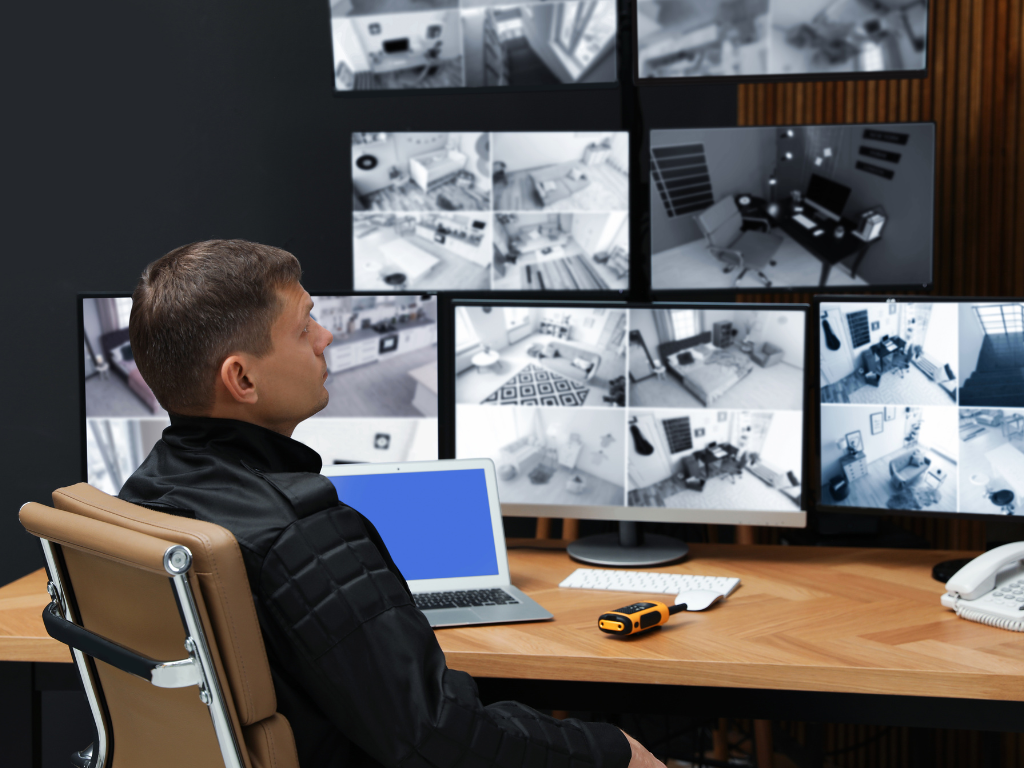
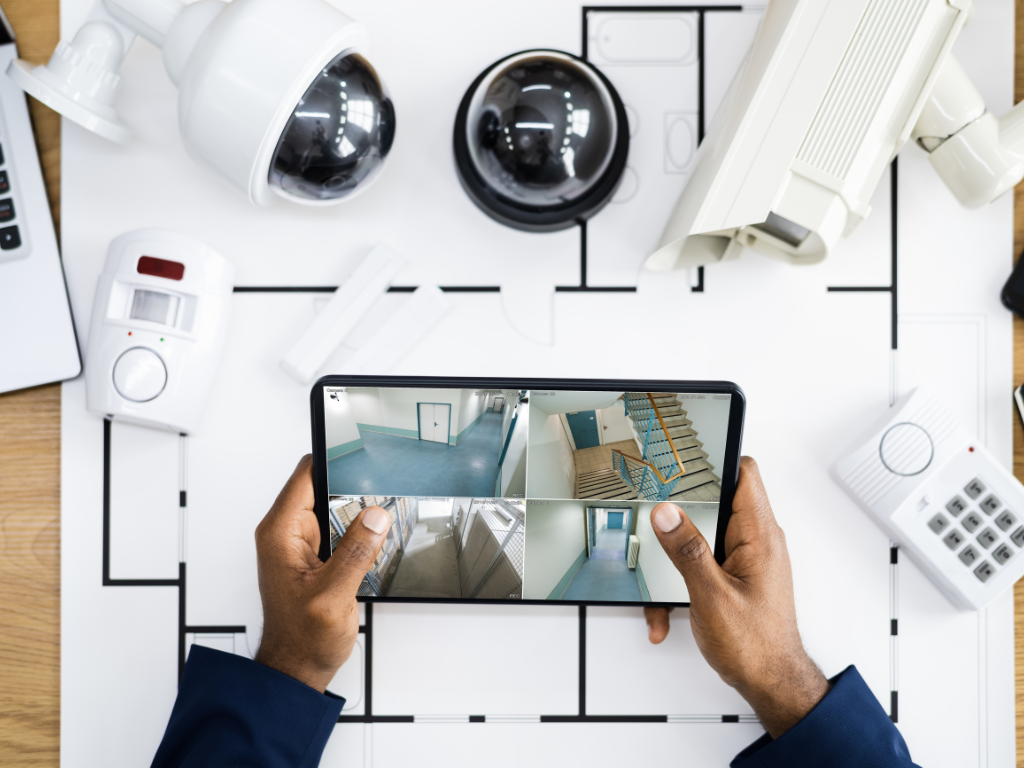
An IP CCTV system is a surveillance setup where network cameras capture video, digitise it on the camera, and send it over an Ethernet network to a recorder or software platform. Analog does the opposite. The camera sends a raw signal down a coaxial cable to a digital video recorder that does the processing.
The architecture drives every practical difference. An IP camera connects over Cat6 cabling to a network video recorder or a video management system, carries its own processor for analytics, and reaches resolutions of 4 megapixel and 8 megapixel that coax struggles to match cleanly. An analog camera relies on a DVR and coaxial runs, which caps resolution and rules out onboard intelligence. IP already accounts for more than 70 percent of surveillance camera shipments across Asia, and analog HD formats are declining at 3 to 5 percent a year as legacy systems retire.
When should a business move off analog CCTV?
Move off analog when any one of four triggers appears: you need readable detail, you want video analytics, you are expanding the site, or your DVR is failing. A single trigger justifies the switch; most businesses hit two or three at once.
The detail trigger is the most common. If your current footage proves an incident happened but cannot identify a face or a licence plate, resolution is the problem, and a 4MP or 8MP IP camera fixes what a 960H analog camera never could. The analytics trigger follows close behind, since line-crossing detection, people counting, and licence plate recognition run on the camera in an IP system and are simply unavailable on analog. Expansion is the third, because adding cameras to a full DVR means a rip-and-replace, while an IP system scales by adding a switch port. The cleaner approach when a DVR dies is to migrate rather than repair, since spending on obsolete analog hardware in 2026 is money that buys no future capability. IMARC Group projects the Singapore CCTV market to reach 1,147.6 million US dollars by 2034 at an 18.14 percent annual rate, and that growth is almost entirely IP.
Is IP CCTV really better than analog HD?
For any new commercial installation, yes, IP wins on the attributes that matter. Analog HD formats such as HD-TVI and AHD closed part of the resolution gap and still suit a small retrofit, but they cannot match IP on analytics, scalability, or integration.
The honest comparison is specific. Analog HD tops out around 5MP to 8MP over coax with no onboard processing, while IP scales past 8MP and runs analytics at the edge. IP cameras speak the ONVIF interoperability standard, so you can mix brands on one platform, whereas analog ties you to compatible DVR hardware. Where analog HD still earns its place is a tight budget on a small site with coax already in the walls, and reusing that cabling can defer the switch. For a multi-camera commercial building, a growing site, or any property that needs CCTV for property security tied to analytics, IP is the specification worth defending.
What is PoE, and why does it matter for IP cameras?
Power over Ethernet lets a single Cat6 cable carry both data and power to an IP camera, removing the need for a separate power supply at each camera point. This is the practical reason IP installs run faster and cleaner than analog, which needs power at every camera location.
The standard ships in three tiers, and matching them to the camera is where installs succeed or fail. Plain PoE (802.3af) delivers 15.4 watts per port, enough for a fixed dome. PoE+ (802.3at) supplies 30 watts for a camera with long-range infrared or a heater. PoE++ (802.3bt) provides 60 watts at Type 3 or 90 watts at Type 4, which a PTZ camera with optical zoom and 200-metre infrared genuinely needs. A single PoE run reaches 100 metres over Cat6, and beyond that you add a switch or a fibre link. Worth noting: size the switch by total power budget, not per-port rating, because a 24-port switch rated at 30 watts per port but only 185 watts total cannot power every camera at once.
How much bandwidth and storage does an IP CCTV system need?
Bandwidth and storage scale with four variables: camera count, resolution, frame rate, and compression codec. A 4MP camera streaming continuously generates several megabits per second, and multiplying that across a 32-camera site is what fills a recorder and saturates a network if the design ignores it.
Compression is the biggest lever you control. According to Fora Soft’s ONVIF guide, “H.265 cuts storage and bandwidth by roughly 50% versus H.264,” so specifying the newer codec almost halves both the network load and the drive requirement at the same image quality. Size the network video recorder to the retention policy first, since a system keeping 30 days at 8MP needs far more storage than one holding 14 days at 1080p. The video management system adds another decision, because a VMS runs on a server and scales to hundreds of cameras across sites, while an NVR is a fixed appliance suited to a single building. Design the storage to the retention target before buying the recorder, not after.
What is ONVIF, and why does it matter?
ONVIF is the interoperability standard that lets IP cameras, recorders, and management software from different manufacturers work together on one system. Founded in 2008, it is the single reason you are not locked to one brand for the life of an installation.
The practical payoff is freedom at replacement time. An ONVIF-conformant camera from one vendor records to an ONVIF recorder from another, so a failed camera can be swapped for a better model without ripping out the platform. ONVIF Profile S covers live streaming, while Profile T adds H.265 support and analytics events, and specifying the profile you need keeps the system honest at procurement. Analog never offered this, which is part of why a mixed-brand IP estate outlasts a proprietary analog one. Insist on ONVIF conformance in writing, because a camera that merely claims compatibility can still break integration in ways a certified profile does not.
Are IP cameras a cybersecurity risk?
Yes, and this is the one real downside analog never had. An IP camera is a networked computer, which means a poorly secured one becomes an entry point into your business network. Bitsight’s TRACE research found more than 40,000 exposed cameras streaming live on the internet in 2025, many with no password at all, and compromised cameras have been conscripted into Mirai-class botnets.
The risk is manageable with discipline, not avoidance. Default credentials are the primary entry vector, so every camera needs a strong unique password before it goes live. CISA’s guidance on networked cameras is direct: minimise internet exposure and place devices behind firewalls, isolated from the business network. In practice, that means putting cameras on a dedicated VLAN, keeping firmware patched, and disabling remote access you do not use. A camera on its own segment with current firmware is a low risk. The same camera on the flat office network with factory defaults is a breach waiting to happen, which is why cyber hardening belongs in the install scope, not a later afterthought.
Can you reuse existing analog coax cabling for IP?
Yes, and it is often the smartest way to phase a migration. Ethernet-over-coax adapters carry IP camera signals over the existing coaxial runs, so you upgrade the cameras and recorder without pulling new Cat6 through finished ceilings.
This matters most in buildings where recabling is the largest cost. A hybrid recorder that accepts both analog and IP inputs lets you replace cameras in phases, keeping working analog units on the same system until budget allows a full switch. The trade-off is honest: coax-carried IP does not always deliver the full bandwidth or PoE flexibility of a fresh Cat6 run, so a high-camera-count 4K deployment still justifies new cabling. For a staged commercial upgrade, reusing coax buys time; for a greenfield fit-out, structured Cat6 is the correct foundation. The right answer depends on whether the walls are already open, not on which technology is newer.
How do you plan an IP CCTV migration in Singapore?
Plan the migration in four steps: audit the current cameras and cabling, set resolution and retention targets, design the network and power budget, then phase the rollout. A migration that starts with a camera count before a site walk is guesswork.
Ask whether existing coax can carry the first phase, because that decides the cabling budget. Confirm the PoE switch budget and the recorder storage against your retention target, and insist the design includes camera cyber hardening as a line item. Tie the cameras into access control integration so door events pair with footage from day one. A supplier offering the full security range can align cameras, switches, recorders, and access control under one design. When you are ready to scope it, request a site survey so the plan is built against your building rather than a template.
Conclusion
Moving off analog in Singapore is a decision made on four triggers: resolution, analytics, expansion, and a dying DVR. IP delivers the detail, the onboard intelligence, and the scalability analog cannot, provided you plan the PoE budget, size storage to a real retention target, and harden the cameras against the network risk that analog never carried. Do that, and the system serves the building for a decade instead of a warranty period.
Enforce Automatic Global designs, installs, and maintains IP CCTV as part of an integrated security setup across Singapore properties. Request a site survey to audit your current cameras and cabling, set resolution and retention targets, and receive a migration plan phased to your budget and building.
Frequently asked questions
Can I mix analog and IP cameras on the same system?
Yes. A hybrid network video recorder accepts both analog inputs over coax and IP cameras over Ethernet, which is how most Singapore businesses phase a migration. You keep working analog cameras running while replacing the priority ones with 4MP or 8MP IP units, then complete the switch when budget allows.
How many megapixels do I need for a CCTV camera?
For general coverage, a 4 megapixel IP camera is the practical baseline in 2026, while entry and carpark cameras that must read faces or licence plates need 8 megapixel (4K). A 2 megapixel camera identifies that an event happened but often fails to identify who, which is why it no longer suits commercial use.
Do IP cameras work without an internet connection?
Yes. IP cameras run on a local network and record to an on-site NVR or VMS without any internet link, so footage is captured whether or not the building is online. Internet is only needed for remote viewing on a phone; the core recording and the ONVIF connection between camera and recorder stay on the local network.
What is the difference between an NVR and a VMS?
An NVR is a fixed hardware appliance that records IP cameras for a single site, while a VMS is software running on a server that manages cameras across multiple sites and scales to hundreds of channels. Enforce specifies an NVR for a single building and a VMS for multi-site estates needing central management.