

Commercial Intruder Alarm System Singapore: Zones & Cost
A commercial intruder alarm system in Singapore is judged on two things buyers overlook: how the premises are zoned, and who answers when it trips. MarketsandMarkets values the commercial security system market at 222.86 billion US dollars in 2025, with Asia Pacific holding the largest share. This blog walks you through sensors, zoning, monitored response, licensing rules, and how to specify one as part of an integrated security setup.
What is a commercial intruder alarm system, and what does it include?
A commercial intruder alarm system is an electronic network of sensors, a control panel, and alerting devices that detects unauthorised entry into business premises and raises an alarm. Five parts do the work. The detectors that sense intrusion, the control panel that processes them, the keypad that arms and disarms, the siren that sounds, and the communicator that signals a monitoring centre.
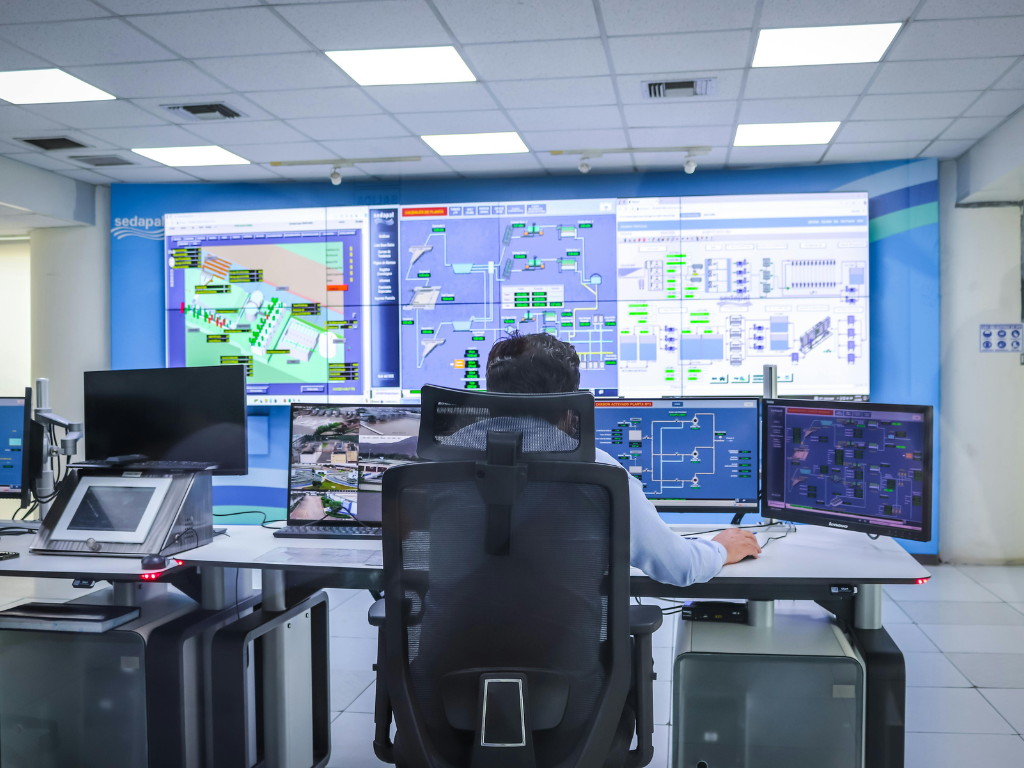
The control panel is the brain. Every detector, keypad, and communicator reports to it, and it decides whether to sound the siren, send a smartphone alert, or transmit a signal to an alarm receiving centre. The panel organises detectors into zones, so a triggered sensor tells you which door or area was breached rather than just that something happened. A commercial panel typically supports 8 to 64 zones, scaling from a single retail unit to a multi-floor office, and holds a battery backup that keeps the system armed through a mains failure. The how intruder alarms work guide covers the component basics in more depth.
What sensors does a commercial intruder alarm use?
Four sensor types cover almost every commercial building: the PIR motion sensor, the door contact, the glass-break detector, and the vibration sensor. Each watches a different attack path, and a good design layers them rather than relying on one.
A passive infrared (PIR) motion sensor detects the body heat of a moving person, covering roughly a 90 by 90 degree field up to 12 metres, which suits open floors and corridors. A door contact uses a magnet and a reed switch to report the instant a door or window opens. Glass-break detectors listen for the acoustic signature of shattering glass at a shopfront, and vibration sensors catch an attempt to drill or cut through a wall or safe. For areas prone to false triggers, such as a warehouse with forklifts and heating, a dual-technology detector that combines PIR with microwave only alarms when both technologies agree, which sharply cuts nuisance activations.

What is alarm zoning, and why does it matter for a business?
Zoning divides the premises into separately identified detection areas so the panel reports exactly where an intrusion occurred and lets you arm parts of the building independently. This is the single biggest design decision in a commercial system, and it separates a professional install from a domestic one bolted onto a business.
Zoning lets a business arm the warehouse and loading bay overnight while staff still work in the front office, a partition that a single-zone home system cannot handle. Perimeter zones on doors and windows can be armed while interior PIR zones stay off, so a shop can secure its entry points during trading hours. Entry and exit zones apply a timed delay on the main door, giving staff 30 to 45 seconds to disarm at the keypad before the siren triggers, while a 24-hour zone on a safe or server room stays live around the clock. Where this breaks down is the common shortcut of wiring a large floor as one zone, which tells a responder the building was breached but not which of forty doors to check.
Should you get a monitored alarm or a bells-only system?
Choose a monitored alarm for any commercial property that holds stock, cash, or data. A bells-only system sounds a siren and hopes someone nearby acts on it, while a monitored system transmits the activation to a 24-hour alarm receiving centre that follows a documented response protocol.
The difference shows at 3am on a public holiday, when no neighbour is listening to a siren. A monitored system sends a signal over a dual-path link, combining IP with cellular backup, so the alarm still reaches the centre if one path is cut. The operator verifies the activation and dispatches a response, whether a keyholder, a guard, or the police. Video-verified monitoring, which pairs the alarm with a camera clip, cuts wasted call-outs sharply. One US restaurant group cited by IndustryArc was carrying roughly 165,000 US dollars in false-alarm costs before switching to video-verified intrusion monitoring. Tying detection to CCTV verification is what turns an alarm from a noise-maker into a response trigger.
Do you need a licence to install or monitor an alarm in Singapore?
Yes. Both installing an intruder alarm and providing alarm monitoring are licensed activities in Singapore, and this is the compliance point that separates a legitimate contractor from a risky one. Under the Private Security Industry Act, the Singapore Police Force requires a Security Service Provider licence to install, maintain, repair, or service security equipment, and separately to provide alarm surveillance or monitoring services.
The licence carries real weight. Since 15 September 2025, it runs for a three-year tenure at a fee of 126 dollars, and the Act contains a specific provision on false alarms under its security-service-provider rules. The practical takeaway is direct: ask any prospective installer for their Security Service Provider licence number and verify it on the police register before signing. A monitoring provider without one cannot lawfully run your alarm receiving centre account, and an unlicensed installer wiring your panel is a liability rather than a safeguard.
What are EN 50131 alarm grades, and which does your business need?
EN 50131 is the European standard for intruder and hold-up alarm systems, and it sorts systems into four grades by the sophistication of intruder they resist. Most Singapore installers and insurers reference it as the design benchmark even though it is not a local statute.
Grade 2 covers most commercial premises without public access to high-value stock, assuming an intruder with basic knowledge and simple tools. Grade 3 steps up to higher-risk sites such as jewellers, pharmacies, and electronics warehouses, where an intruder is expected to plan the attack and defeat a simple system, and it requires dual-technology detection. Grade 4 addresses the highest-risk premises with round-the-clock professional threat. Grade 1 is the floor, and as Aviva’s intruder alarm loss-prevention standard notes, it is “not acceptable for police response.” Match the grade to a written risk assessment of the site, not to the cheapest quote, because under-grading a jeweller invites both a break-in and an insurance dispute.
How do you reduce false alarms in a commercial system?
False alarms are almost always a design or installation fault, not a hardware failure, and they carry a direct cost in Singapore. Repeated false activations can attract fines from the Singapore Police Force and, worse, train staff and responders to ignore the siren.
Three measures cut them decisively. Dual-technology detectors in high-disturbance areas stop a PIR from alarming on a forklift’s heat or a swinging banner. Sequential confirmation, where the panel only escalates after two separate detectors trip within a short window, filters out single spurious triggers. Correct sensor placement keeps PIRs away from air-conditioning vents and direct sunlight, the two most common nuisance sources. AI-assisted monitoring platforms now reduce false alarms by up to 85 percent against conventional motion-only systems, according to Emergen Research. The honest position: if a commercial system false-alarms every week, the fix is a design review, not a more sensitive sensor.
How does the alarm integrate with CCTV and access control?
An intruder alarm delivers the most value when it shares events with the systems that watch and control the building. A tripped zone can cue the nearest camera to record and bookmark the clip, turning a blind siren into a verified event an operator can act on.
The tighter integration runs through the door layer. Linking the alarm to access control systems means arming the alarm can lock down non-essential doors, and a valid card swipe can automatically disarm the relevant zone so staff do not fumble at a keypad. A forced-door event on the access system can trigger the alarm directly. This is where a single supplier designing the alarm, the cameras, and the access control together beats bolting three brands onto one building, because the zones, the camera views, and the door rules are planned as one response.
How do you choose a commercial alarm installer in Singapore?
Judge an installer on four things: a valid Security Service Provider licence, a zoning plan drawn to your floor layout, a monitored dual-path option, and a false-alarm reduction strategy. A contractor who quotes a sensor count before walking the site is selling parts, not protection.
Ask to see a proposed zoning plan, because that document reveals whether they understand how your business actually operates after hours. Ask which EN 50131 grade they design to and why, and confirm the monitoring runs over a dual-path link rather than a single line that a burglar can cut. The commercial security market these systems sit within is projected to reach 381.66 billion US dollars by 2030 at an 11.4 percent annual rate, which is pulling more installers into the field and widening the gap between those who design to a risk assessment and those who fit a default kit. A firm offering the full security range can align the alarm with cameras and access control under one design. When you are ready to specify properly, arrange a security audit so each zone and sensor is matched to your premises.
Conclusion
A commercial intruder alarm system in Singapore stands or falls on zoning and monitoring. Zone the building so a responder knows exactly where to go, monitor it over a dual-path link so the alarm reaches a staffed centre at any hour, and specify the EN 50131 grade against a real risk assessment. Get those right, with a licensed installer, and the system protects assets instead of generating fines and ignored sirens.
Enforce Automatic Global designs, installs, and maintains commercial intruder alarms as part of an integrated security setup across Singapore properties. Book a security audit to map your zones, monitoring, and response plan, then receive a specification built for your building and its risk profile.
Frequently asked questions
How much does a commercial intruder alarm system cost in Singapore?
Cost is driven by four levers: the number of zones, the sensor types, whether the system is monitored, and the EN 50131 grade. A small retail unit with perimeter contacts and a few PIRs sits at the low end, while a Grade 3 warehouse with dual-technology detection and 24-hour monitoring sits far higher. A site audit fixes the zone plan before pricing.
What happens when a monitored alarm goes off?
The control panel transmits the activation to a 24-hour alarm receiving centre over a dual-path link. An operator follows a documented response protocol, verifying the signal, contacting the keyholder, and dispatching a guard or police as needed. Video-verified systems let the operator confirm a genuine intrusion before response, which cuts wasted call-outs and false-alarm costs.
Will the alarm still work during a power or internet outage?
Yes. A commercial control panel carries a battery backup that keeps it armed through a mains failure, typically for several hours. Monitored systems use a dual-path communicator combining IP with cellular backup, so the signal still reaches the alarm receiving centre if the internet line is cut or fails.
What is the difference between a burglar alarm and an intruder alarm?
There is no functional difference; both terms describe the same system that detects unauthorised entry. “Intruder alarm” is the term used in the EN 50131 standard and by most commercial installers, while “burglar alarm” is the older consumer phrasing. Enforce and other Singapore providers use them interchangeably for the same control panel, sensors, and monitoring.