

Ultra Slim Sliding Door Singapore vs Swing Door
Choosing an automatic sliding door system is often the starting point when people compare glass door layouts in Singapore. The real decision is usually between an ultra slim sliding door singapore setup and an ultra slim swing door. This blog will walk you through which one suits your layout, traffic flow, and space constraints better.
Ultra-slim doors solve a design problem and a layout problem
Ultra slim doors are chosen for their narrow aluminium framing, cleaner sightlines, and lighter visual impact than bulkier framed systems. On Enforce’s live product pages, both the Ultra Slim Series Sliding and Ultra Slim Series Swing sit under the manual doors range, which already signals something important: these are not just decorative glass panels. They are door systems intended to shape how a space opens, closes, and circulates.
That is why the comparison should not start with aesthetics alone. A sliding leaf and a swing leaf behave differently in daily use. One saves opening clearance by moving laterally along a track. The other uses a pivoted swing path that needs a radius in front of or behind the door. If the layout is tight, that difference affects furniture placement, corridor comfort, and how people actually move through the opening.
In practice, buyers who choose purely by appearance often end up correcting the decision later through awkward furniture shifts, reduced usable floor space, or door paths that feel fine on plan but annoying in real use. A slim frame glass door looks refined either way. The better choice depends on the room geometry.
Ultra slim sliding doors are stronger when floor space is tight
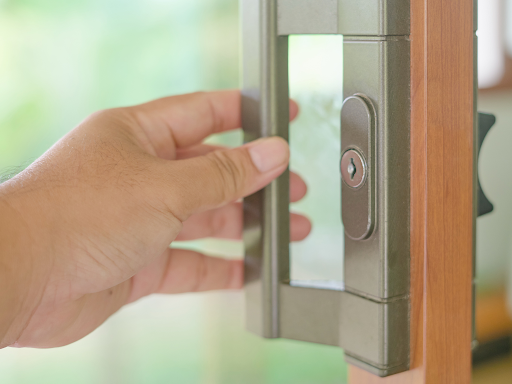
An ultra-slim sliding door is usually the better fit when the layout cannot spare swing clearance. That is the most important difference, and it is the reason sliding systems are so often chosen for compact interiors, meeting room entries, storefront dividers, home offices, and room-to-room transitions where every bit of floor space matters.
The practical advantage is simple. The door panel moves across rather than into the room. That protects usable floor area near the opening and reduces the chance of the door leaf clashing with chairs, cabinetry, display shelving, or foot traffic. Enforce’s Ultra Slim Series Sliding category sits naturally alongside other sliding options such as telescopic sliding and bi-parting systems, which reflects how often sliding layouts are chosen to maximise opening efficiency.
This matters most in Singapore interiors because layouts are often compact even in commercial units. When a meeting room sits beside a corridor, when a retail partition line meets a display wall, or when a room divider needs to preserve floor space near a workstation, the sliding option usually gives the cleaner outcome.
Ultra slim swing doors are stronger when passage feels more natural with a hinged leaf
An ultra slim swing door makes more sense when the layout can comfortably absorb the swing radius and the user experience benefits from a hinged opening. Enforce’s Ultra Slim Series Swing product information highlights a top-and-bottom free pivot design with no wall hinges required, which suits projects where the glass leaf is meant to read more like a refined architectural element than a track-based partition.
That can work very well in private offices, room entries, boutique interiors, or residential-style commercial spaces where the opening is used more like a conventional door and less like a divider. A swing leaf also gives a familiar feel. Users intuitively understand how to approach it, and in some layouts the movement feels more direct than sliding the panel aside.
The trade-off is spatial. A swing door demands a clear path for the leaf. If the opening is placed near furniture, a corridor corner, or a narrow transition zone, that requirement can become the deciding factor against it.
Opening clearance is the first filter, not an afterthought
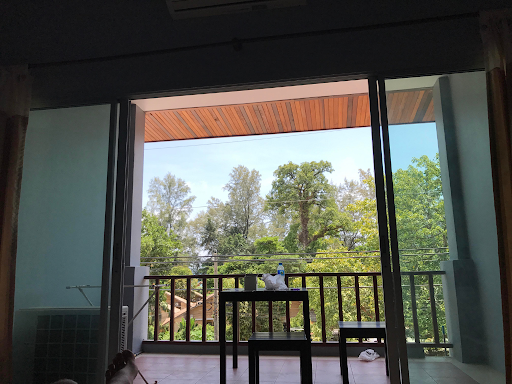
The cleanest way to compare these two systems is to ignore finish for a moment and start with opening clearance.
If the space in front of the opening is busy, narrow, or likely to change over time, a sliding door usually wins. If the space around the opening is generous and the room benefits from a more conventional hinged movement, a swing door can work beautifully. This is not a minor technical detail. It is the first layout question that should be answered before anyone starts discussing frame colour or glass type.
In practical planning terms, sliding helps when you want the opening zone to remain usable. Swing helps when the opening zone is already free and the user approach is straightforward. That is the core difference between floor space efficiency and swing radius tolerance.
Traffic flow changes the answer quickly
Traffic flow is where a door choice starts affecting daily comfort rather than just visual design.
A sliding door is often better in spaces where people pass frequently, cross near the opening, or approach from multiple directions. Because the panel stays within its own lateral movement path, it does not suddenly occupy part of the walking area when opened. That helps in offices, clinics, consultation rooms, showrooms, and compact commercial units where side clearance is easier to manage than forward clearance.
A swing door can still work well in quieter rooms with lower two-way traffic, but it is more dependent on user timing and available space around the leaf. In a busy layout, the door can become part of the traffic problem rather than part of the solution.
This is one reason Enforce’s broader manual door range separates sliding, swing, folding, and slide-and-park systems into distinct categories. The site structure itself reflects a real-world truth: different movement patterns call for different door mechanics.
Interior zoning is where sliding usually pulls ahead
For interior zoning, ultra-slim sliding doors tend to be more flexible. They work well as room dividers because they let the opening line stay visually light while avoiding the intrusion of a swinging leaf into either zone.
That is especially relevant in Singapore offices and mixed-use interiors where one room may need to function as open collaboration space at one point and enclosed meeting space at another. Enforce’s recent blog content around operable walls, ceiling partitions, and innovative office partition ideas all point in the same direction: flexible interior boundaries are more valuable when they change the room without wasting floor area.
A swing door can still be part of interior zoning, but it behaves more like a room entry than a divider. If the design brief is to preserve openness when closed and minimise interference when opened, sliding is usually the better answer.
Entrance aesthetics depend on more than the frame profile
Both systems can look clean, minimal, and high-end. The slim aluminium frame is doing much of the visual work either way. The real aesthetic difference comes from how the door behaves inside the architecture.
A sliding door feels more integrated when the project wants visual calm and uninterrupted flow along the wall plane. A swing door feels more architectural when the project wants the door leaf to read as a distinct object within the opening. Neither is automatically more premium. The layout and design intent decide that.
Enforce’s product pages support that distinction indirectly. The Ultra Slim Series Sliding is grouped with more space-efficient sliding variants, while Ultra Slim Series Swing is presented more like a refined, pivot-based entry element. That fits how designers and owners usually experience them on site.
Accessibility and circulation should still be checked before finalising the door type
This is where a lot of stylish door decisions become weak technical decisions. Singapore’s Code on Accessibility in the Built Environment states that accessibility and usability should be integrated into the overall design from the start, not treated as a late correction. The 2025 code and related BCA materials also distinguish between clear widths and clear floor spaces at doorways, which matters when a swing leaf or sliding panel changes how people actually approach and pass through the opening.
In plain terms, the opening is not only about the panel. It is about the usable space around it. A swing door may technically fit the opening width but still create a clumsy approach if the clear floor space outside the leaf is too tight. A sliding door may protect that approach area better, but it still needs proper track planning and handle placement.
That check becomes more important in commercial interiors with mixed users, such as elderly visitors, people carrying items, cleaners with equipment, or anyone moving through the door while the surrounding area is partially occupied.
Egress logic can also influence the better layout choice
Where the door sits along a circulation or exit path, the choice cannot be purely aesthetic. SCDF’s Fire Code 2023 is the key reference for fire-safe building design in Singapore, and its means-of-escape provisions include minimum clear widths for exit doors and rules to ensure doors do not impede egress when swung open. Those principles are especially relevant when a swing door is being considered in a tighter corridor or transitional space.
This does not mean an ultra slim swing door is a poor choice by default. It means the layout has to be reviewed in use, not only in elevation. If the swung-open leaf narrows the path awkwardly or competes with adjacent movement, the sliding option may be the cleaner answer.
The right choice depends on what the room needs most
Choose ultra slim sliding doors when:
- Floor space near the opening is limited
- The door sits close to furniture or a corridor path
- The space needs cleaner interior zoning
- Multiple people may pass near the opening throughout the day
- The design wants a quieter wall-plane effect
Choose ultra slim swing doors when:
- The layout can comfortably absorb the swing radius
- The opening is used more like a conventional room entry
- The design benefits from a pivoted glass leaf
- The surrounding space is calm and uncluttered
- The user experience suits a hinged movement better
That is the real comparison. It is not sliding versus swing as a style debate. It is space-saving lateral movement versus more traditional hinged movement.
Conclusion
An ultra slim sliding door usually fits better when the layout is tight, the traffic flow is active, or the opening needs to preserve usable floor area. An ultra-slim swing door works better when the room can spare the swing radius and the entry is meant to feel more like a defined architectural door.
If you are planning a slim frame glass door in Singapore, speak to Enforce about the opening width, surrounding furniture, traffic pattern, and intended use before locking in the door type. That is what determines whether sliding or swing will work better in the finished space.
FAQs About Ultra Slim Sliding Door Singapore
What is the difference between an ultra slim sliding door and an ultra slim swing door?
An ultra-slim sliding door moves laterally along a track and saves opening clearance. An ultra slim swing door pivots on a hinged or pivoted axis and needs swing radius space around the leaf.
Which is better for small spaces in Singapore?
In most compact layouts, an ultra-slim sliding door is better because it preserves floor space near the opening and avoids leaf interference with furniture or walking paths.
Is an ultra-slim swing door more suitable for offices?
It can be, but only where the office layout can handle the swing path. For tighter meeting rooms and higher-traffic zones, sliding is often easier to live with.
Do slim-frame glass doors affect accessibility planning?
Yes. BCA’s accessibility code makes clear that usable approach space and clear doorway conditions matter, not just the visible opening size.
Does door type matter for circulation and egress?
Yes. SCDF’s Fire Code includes minimum clear-width and egress-related door requirements, so the door’s behaviour in use can affect whether a layout works safely.