

Automatic Barrier Gate Singapore: MCST Inspection Guide
Most MCSTs in Singapore judge an automatic barrier gate Singapore purchase by price and brand. The real cost shows up after installation, when residents queue or the arm clips a van. This blog will walk you through how these barriers work, the sensor logic that keeps cars safe, and the checks every MCST should run before signing off.
What an automatic barrier gate actually does at a Singapore condo gantry
At a typical condo entrance, an automatic vehicle barrier in Singapore is doing more than lifting an arm. It controls who enters, paces traffic flow at peak hours, and logs vehicle movement for the security team. The same engineering applies to industrial boom gates and to automatic gate installation projects across Singapore, so a quick walk through the hardware is useful before you compare quotes.
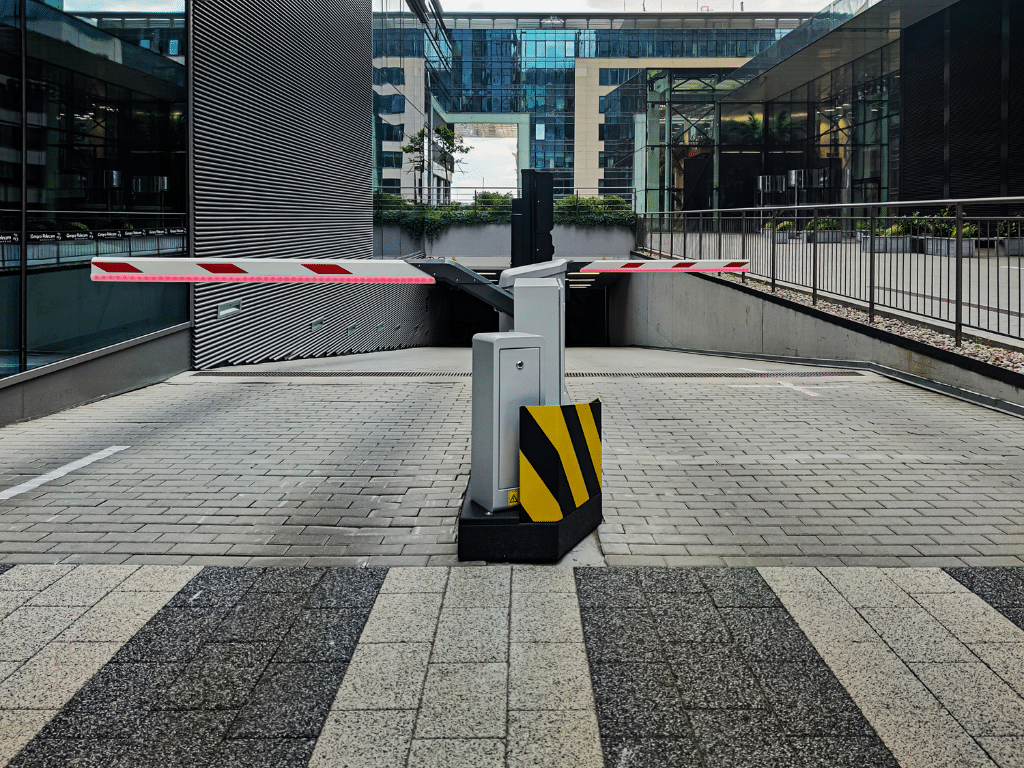
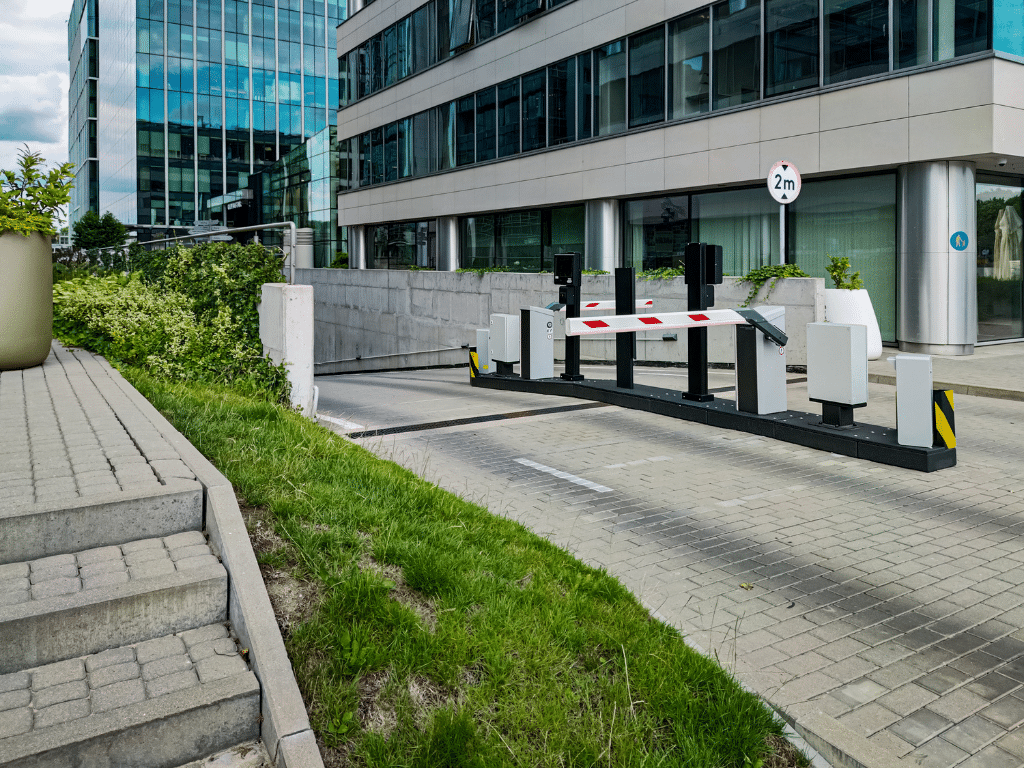
A barrier system has four working parts:
- The barrier cabinet, which contains the motor and gearbox.
- The boom arm, usually 3 to 6 metres of aluminium for condos and longer for industrial yards.
- The barrier control board, the PCB that takes inputs from sensors and decides when to lift, lower, or hold.
- The detection layer, made up of induction loops, photocells, and reader devices.
The arm is the easy part. What separates a five-year trouble-free install from a recurring repair ticket is how the control board is wired and where the sensors are placed.
How the control board makes decisions
The barrier control board is a small PCB inside the cabinet. It receives a signal from the gooseneck reader (driver swipes a card or RFID tag), checks the credential against a permitted list, and triggers the motor to raise the arm. While the arm is up, the board watches the induction loop and photocell beam. The arm only drops once the safety loop confirms the vehicle has cleared.
Modern boards on the Singapore market run programmable timers, anti-crash logic, and an emergency open relay tied to the fire alarm panel. Cheaper boards skip the fire-alarm interface, which becomes a real problem during inspection by the building MA.
The sensor logic inside an automatic vehicle barrier
The sensors are where most procurement teams stop reading. They should not. Sensor design is the single biggest predictor of whether your barrier will be safe and reliable in the first three years.
Induction loop sensor: the unsung workhorse
An induction loop sensor is a coil of wire embedded under the road surface, usually 50mm to 80mm below the tarmac. Current passes through the coil and creates a magnetic field. When a vehicle’s metal mass enters the field, the inductance changes, and the loop detector sends a signal to the barrier control board.
Most Singapore condo installations use two loops per lane:
- An entry loop sits about 1 metre before the barrier. It tells the board a vehicle is requesting entry.
- A safety loop sits directly under the arm. As long as a vehicle is on this loop, the arm cannot drop. The safety loop functions as a presence sensor, telling the board the lane is occupied.
Skipping the safety loop is a cost-cutting move that contractors sometimes make on tight tenders. It is also the most common reason a barrier ends up resting on top of someone’s bonnet.
Photocell beam: the anti-crash detection layer
A photocell beam is an infrared sender and receiver pair mounted at roughly 500mm to 700mm height on either side of the lane. The beam runs across the path of the arm. If the beam is broken while the arm is descending, the board reverses the arm immediately.
A photocell does what an induction loop cannot. It detects pedestrians, motorcycles low to the ground, and small objects that might not register on a metal-only loop. The two sensors work together. The loop handles vehicle presence. The photocell catches anything else.
Look at the photocell safety sensor specs for operating range, beam type, and IP rating. IP54 is the minimum I would accept for an outdoor Singapore install.
Anti-crash detection beyond the sensors
Modern boards add a torque-sensing layer on top of the loop and photocell. If the motor draws more current than expected during the down stroke, the board reads that as an obstacle and reverses. This is the third line of defence after the loop and the beam.
A useful reference for force limits is the European standard HSE (UK Health and Safety Executive) safety bulletin on BS EN 12453, which sets a maximum allowable contact force of 400N for gaps between 50mm and 500mm and requires the force to drop below 150N within 750 milliseconds. Singapore does not enforce EN 12453 by law, but reputable suppliers design to it because it is the most defensible specification when an incident is investigated.
Gooseneck readers and the access control link
The gooseneck reader is the goose-neck pole at driver-window height that holds the RFID antenna, card reader, or LPR camera. It is the user-facing part of the system, and where most procurement decisions go wrong. A good reader matches the access control system the building already runs. If your condo uses Soyal or ZKTeco card credentials at the lift lobby, the carpark reader should integrate with the same backend, not a parallel database the security team must maintain twice.
What MCSTs should inspect before buying an automated entry barrier system
This is where the money is. MCST inspection of barrier procurement usually happens too late, after the contractor has poured the kerb. Bring these checks forward to the tender stage.
The site survey: ramp gradient, swing radius, traffic calming
Walk the entrance with the contractor and demand a survey, not a sales visit. Four site facts decide whether a barrier works at your gantry:
- Ramp gradient at the approach. The BCA Code on Accessibility 2025 calls for kerb ramps no steeper than 1:10, and the code itself is a useful reference even when you are not directly governed by accessibility provisions. A barrier installed at the bottom of a steep ramp will scrape low-clearance vehicles. Singapore condos with basement carpark approaches see this often.
- Swing radius of the arm. A 4.5-metre arm needs a clear arc above the lane. Tree branches, signage, and overhead pipes are all common culprits. Measure to the highest point of the arm at the open position.
- Traffic calming distance. Allow at least 5 metres between the kerb humps and the barrier. If the hump is too close, vehicles slow over the safety loop and the arm drops on a stationary boot.
- Overhead clearance. The BCA code requires vehicle park entrances to have a height clearance of at least 2000mm. Add a buffer for the rising arm and any signage.
Duty cycle and motor type
Not every motor is rated for condo traffic. A residential development with 200 lots might see 800 cycles a day at peak. A 30 percent duty cycle motor will overheat by the third Sunday of the month. Insist on 100 percent duty cycle for any condo with more than 100 lots, and ask for the manufacturer’s heat run data, not the brochure.
DC motors handle high-frequency cycles better than AC motors and have softer start and stop curves, which protects the arm. This matters more than most quote sheets reveal.
Safety compliance and emergency release
Four checks belong on your inspection list:
- A manual release key that lets security staff open the arm if the board fails.
- A relay input wired to the fire alarm panel so the arm rises automatically during evacuation.
- A backup battery rated for at least 100 cycles in the event of a power trip.
- A signed report from the installer confirming the closing force has been measured and falls within the EN 12453 thresholds quoted earlier.
If the contractor cannot show you these on the day of acceptance, do not sign the handover form.
Service contract and parts availability
A Singapore carpark barrier cycles 30,000 to 60,000 times a year, and the board, motor, and arm hinges all wear. A cheap barrier with a six-month warranty and no local stock will cost more in year two than a pricier model with a five-year plan. Look at how the after-sales service is structured, including response time guarantees and parts inventory held in Singapore. A 4-hour response time is standard for an MCST contract. Anything longer is a red flag.
Common procurement mistakes I see in Singapore condo tenders
Several mistakes show up repeatedly when MCSTs evaluate barrier proposals.
The first is awarding by lowest price without ranking duty cycle and sensor configuration. A $3,500 barrier without a safety loop is more expensive than a $5,500 one with full sensor coverage by the second damage claim.
The second is ignoring integration. A barrier bought standalone, then bolted onto the access control system later, ends up with two databases for residents and two cards in every wallet. Spec the integration before you buy the hardware.
A third mistake is treating boom gates and lot blockers as interchangeable. They solve different problems. A practical boom gate versus lot blocker comparison for 2026 lays out the use cases. For a single shared gantry with mixed-resident traffic, a boom gate is almost always the right choice. A lot blocker fits a single reserved bay.
The fourth is buying without site verification. The brochure spec assumes an ideal install. Your driveway is rarely ideal. For deeper procurement context, the guide on choosing the right car park barrier in Singapore covers the operational trade-offs, and the live automatic barrier product range shows the duty cycles available locally.
Conclusion
If your MCST is sourcing or replacing a barrier this year, bring the engineering questions to the tender stage, not the warranty claim stage. A site survey, a sensor configuration check, a duty-cycle verification, and a fire-alarm interface test cost nothing during procurement and a great deal once the kerb is poured.
Speak to the Enforce team for a site survey on your condo, factory, or commercial gantry, and get a barrier specification grounded in your actual traffic, not a brochure assumption.
Frequently asked questions
How long does an automatic barrier gate last in Singapore conditions?
A well-specified barrier with a 100 percent duty cycle DC motor and IP54 photocells typically runs 7 to 10 years before major refurbishment. Singapore’s humidity stresses the cabinet seals more than the motor itself, which is why annual induction loop checks and barrier control board cleaning belong in any service contract.
Can the same automatic vehicle barrier work for both residents and visitors?
Yes, when paired with a multi-credential gooseneck reader. The reader handles RFID for residents and a separate channel, such as intercom call, QR code, or LPR camera, for visitors. The barrier control board only cares that an authorised input was received. The complexity sits in the access control software, not the barrier hardware.
What is the difference between an induction loop and a photocell beam?
An induction loop detects metal mass in a magnetic field under the tarmac and registers vehicle presence. A photocell beam projects an infrared line across the lane and triggers when broken by anything, including a person. A safe automatic vehicle barrier in Singapore uses both, because each catches what the other misses.
Does the barrier need to open automatically during a fire alarm?
Yes, on most Singapore developments. The barrier control board should have a relay input wired to the fire alarm panel that forces the arm to the open position during evacuation. This is a basic life safety requirement and a frequent failure point in cheaper installs that skip the relay.
How often should an MCST service the barrier?
Every six months at minimum, with a full annual inspection covering loop integrity, photocell alignment, motor current draw, and emergency release. Move to quarterly service if your barrier sees more than 50,000 cycles a year. Cycle-count-based intervals beat calendar-based ones.