

Automatic Door Repair Singapore: Faults & Fixes
Automatic door repair in Singapore usually traces to one of four sources: a sensor fault, a motor or drive-belt issue, a track problem, or a controller failure. A neglected automatic sliding door lasts an average of 7 to 9 years, while a maintained one runs 12 to 15. This blog walks you through diagnosing each fault and deciding when to repair or replace, backed by automatic door supply and service.
Why is my automatic door not closing or not opening?
An automatic door that will not close is most often a safety-beam sensor problem; one that will not open is usually a motion-sensor or power fault. The door’s control logic treats a triggered or blocked safety beam as an obstruction and holds the door open to avoid striking someone.
The diagnosis splits cleanly by symptom. A door stuck open generally means the photocell safety beam is misaligned, dirty or obstructed, so the controller thinks something is in the doorway. A door that will not open at all points to the motion sensor not detecting approach, a tripped power supply, or a controller fault. A door that opens but will not close is the single most common automatic door call, and a misaligned or contaminated safety beam is the usual cause. Reading the symptom correctly is what separates a five-minute sensor clean from an unnecessary motor callout.
What are the most common automatic door sensor faults?
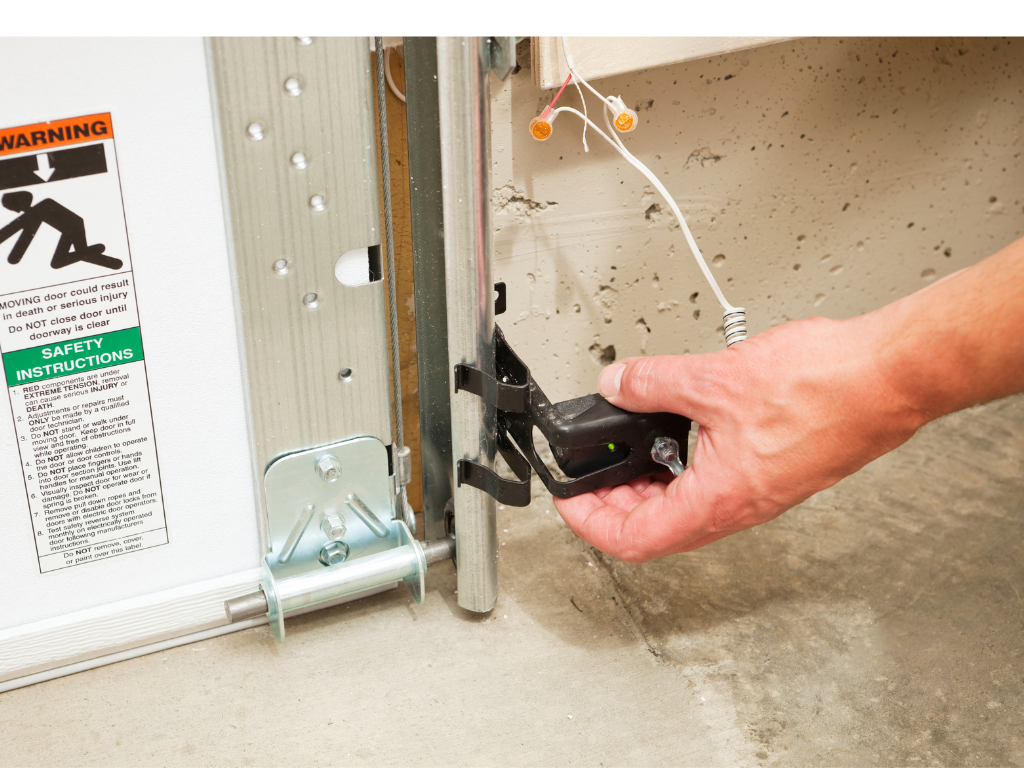
The most common sensor faults are motion-sensor drift, safety-beam misalignment, and a contaminated sensor lens. Automatic doors use two sensor types: a motion sensor (microwave or infrared) that detects approach, and a safety beam (photocell) that prevents the door closing on a person.
Each fails differently. A motion sensor that has drifted out of its detection field leaves the door slow to open or unresponsive, while a knocked or vibrated safety beam throws the door into permanent hold-open. Dirt is the quiet culprit in Singapore: dust, insects and humidity film on a sensor lens degrade detection accuracy long before the sensor truly fails. A sensor reading the floor or a passing reflection instead of a person is recalibrated, not replaced. The fault is correctly diagnosed by testing the sensor’s field and cleaning the lens before any part is condemned.
What causes automatic door motor and drive-belt faults?
Motor and drive-belt faults come from wear through operational cycles, and they announce themselves before they fail completely. A drive belt shows visible cracking and fraying for weeks before it snaps, and a worn motor makes the door move slowly, judder, or stop mid-travel.
The belt is the early-warning component. Belts stretch and crack under load, and a stretched belt slips, so the door loses sync and stutters. Catch it at the cracking stage and a belt swap is a routine repair; ignore it and the snapped belt can damage the motor and track it drives. Strange grinding or whining usually means the gearbox or bearings, which need a technician, not a reset. A heavier door, such as an automatic swing door unit on a worn operator, strains the motor faster. A door that judders or moves at half its normal speed is telling you the drive system needs inspection now, not at the next scheduled visit.
Why is the door binding, juddering or coming off the track?
A door that binds or judders along its run has a track fault: debris in the guide track, worn rollers, or misalignment that forces the door to fight its own path. The track is the rail the door carriage rides, and any obstruction or wear there shows up as rough, noisy movement.
Track problems compound. Dirt and grit in the track raise friction, which makes the rollers struggle and the controller feed more power to the motor, accelerating wear across the whole drive system. Worn rollers let the door sag and rub, and a knocked track lets the leaf drift out of true. For automatic sliding door systems, keeping the track clear is the cheapest single thing that prevents motor wear. A door grinding along its track is not just noisy; it is quietly overloading the motor that drives it.
What can you safely check yourself before calling a technician?
You can safely check three things: clear any obstruction in the doorway, wipe the sensor lenses, and confirm the door has power at the supply. These resolve a meaningful share of call-outs without a technician.
Stop there. Anything involving the motor, the control board or the safety-edge calibration needs a certified technician, because the safe closing force and sensor timing are set to a defined safety performance benchmark, the ANSI A156.10 safety standard, and a miscalibrated door can injure someone. Resetting a tripped supply once is reasonable; repeatedly flipping a breaker that keeps tripping is not, since it points to an electrical fault. The honest boundary: clean and clear, yes; open the operator housing, no. Unqualified internal repairs can void the warranty and compromise the door’s safety compliance, which is why the drive and controller belong to a trained technician.
When should you service an automatic door versus replace it?
Service the door when the fault is an isolated component on an otherwise sound system; replace it when a major repair on a worn, out-of-warranty unit approaches the cost of a new one. Age and repair history decide the call more than the single fault in front of you.
A motor or controller failure on a young, well-maintained door is a repair. The same failure on a door already past 10 years, showing wear across belt, rollers and track, is the point to replace, because fixing one major part on a tired system usually precedes the next failure. How replacement is costed is set out separately, but the rule holds: when the repair bill on an aged door reaches a large fraction of replacement, replace. Preventive maintenance is what keeps a door on the repair side of that line, extending its life from an average of 7 to 9 years to 12 to 15. Pouring a major repair into a worn, out-of-warranty door is the decision owners most often regret.
How often should an automatic door be serviced to prevent faults?
A commercial automatic door should be professionally serviced and inspected at least once a year, with high-traffic doors checked more often. Most door-down emergencies are preventable faults caught at a scheduled visit: a cracking belt, a drifting sensor, a track filling with grit.
Annual is the documented minimum. Published annual inspection guidance recommends planned preventive maintenance plus a yearly certified inspection, with higher frequency for heavy pedestrian volume. A serviced door has its belt tension checked, its sensors recalibrated, its track cleaned and its safety force tested before any of those become a breakdown. The data is blunt on the payoff: structured preventive maintenance extends automatic sliding door life from 7 to 9 years up to 12 to 15. A high-traffic Singapore retail or clinic door serviced once a year at most is running on borrowed time, and the repair bill eventually collects.
How fast can you get an automatic door repaired in Singapore?
A failed commercial automatic door is a same-day repair priority, and the response speed depends on whether your provider holds the parts locally. A jammed entrance blocks accessible access and can obstruct an egress route, so it is an operational and safety problem, not a cosmetic one.
The bottleneck is rarely the technician; it is the part. A provider that stocks common operators, belts, sensors and control boards in a Singapore inventory fixes a fault on the first visit, while one waiting on an imported part leaves the door down for days. Enforce Automatic Global Pte Ltd runs supply, installation and repair as one operation, which is what lets a diagnosis and a parts fix happen in the same visit rather than across three. Ask any repair provider two questions before you need them: the response time for a door-down call, and whether they stock your door’s parts here. The fast repair is the one where the technician arrives already carrying the part.
Conclusion
Automatic door faults are rarely mysterious once you read the symptom: a door that will not close points at the safety beam, juddering points at the belt or track, and a dead door after a storm points at the controller. The repair-or-replace line is set by age and warranty, not by the single fault, and yearly servicing is what keeps a door on the cheaper side of that line for 12 to 15 years instead of 7 to 9.
Got a door that will not close, opens slowly, or judders on its track? Book a diagnostic visit with Enforce and get a repair plan that names the faulty part and the fix, not a temporary reset.
Frequently asked questions
Why does my automatic door open by itself or stay open?
A door that opens by itself or stays open almost always has a triggered motion sensor or a misaligned safety beam. The motion sensor may be detecting passing traffic, rain or a reflective surface, while a knocked safety beam tells the controller the doorway is blocked. Recalibrating or cleaning the sensor resolves most of these cases.
How long does an automatic door motor last?
A well-maintained automatic door operator lasts around 12 to 15 years, against an average of 7 to 9 for a neglected one, according to maintenance industry data. Service interval is the deciding factor, since a clean track and correct belt tension keep the motor from overworking and burning out early.
Is it worth repairing an automatic door after a power surge?
It depends on what the surge damaged. A power surge, common in Singapore’s thunderstorm season, typically hits the control board rather than the motor, and a controller replacement on an otherwise sound door is worth repairing. If the door is already past 10 years with other wear, the surge is often the trigger to replace the full system.