

Operable Movable Wall Singapore Guide
In Singapore, space rarely stays static for long. An operable movable wall solution makes sense when a commercial interior needs to change function without permanent rebuilding. This blog will walk you through when an operable movable wall singapore system is the better choice over fixed partitions, and what commercial buyers should evaluate before committing.
Operable movable walls are built for rooms that need to change use
An operable movable wall is a track-mounted partition system made up of retractable wall panels that can divide a large room into smaller enclosed spaces or open it back up when needed. Enforce’s product page positions these systems around flexible space management for offices, conference centres, hotels, and other commercial environments where layouts need to shift without permanent construction.
That distinction matters because a fixed partition does one job. It permanently defines a room. An operable wall does a different job. It lets the same floor area serve multiple uses across a day, week, or event cycle. In a commercial setting, that changes the value of the space itself. A room that can host a town hall in the morning, split into breakout rooms in the afternoon, and reopen for training in the evening is more useful than a room locked into one format.
This is why movable wall systems are common in boardroom suites, training centres, hotel function rooms, educational facilities, church halls, event venues, and larger offices with shifting occupancy patterns. The real benefit is not novelty. It is commercial interior adaptability.
Fixed partitions make sense when the room use is stable
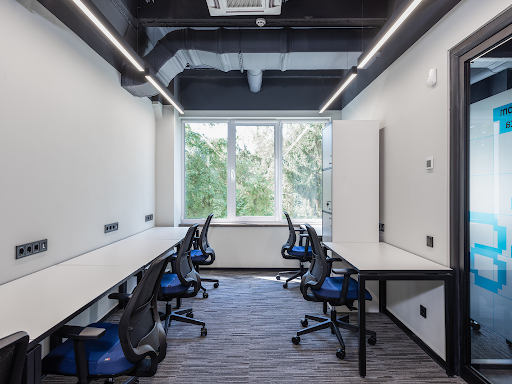
A fixed partition still has a place. If a room has one clear use, needs permanent services routed through it, or requires a consistently enclosed layout, a fixed wall may be the right answer.
That applies to spaces like dedicated HR rooms, server rooms, permanent executive offices, utility rooms, and areas where acoustic separation, fire separation, or security requirements are tied to a non-changing layout. A fixed partition also makes sense when the room boundaries are unlikely to change over the life of the fit out.
The mistake is assuming fixed walls are always the safer choice because they feel more familiar. In many commercial projects, fixed partitions create an invisible cost. They lock the floor plan too early. Once the business grows, the meeting mix changes, or the venue starts hosting different functions, the layout becomes the constraint.
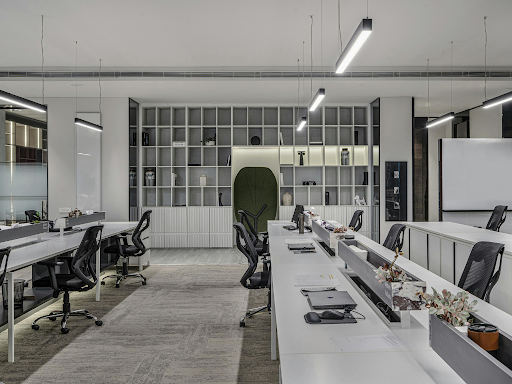
Commercial spaces gain the most when room demand changes week to week
The best use case for a movable divider wall Singapore project is a space with recurring but variable demand. That includes businesses that need one large room on some days and several smaller rooms on others.
Enforce’s own operable wall content consistently frames this around flexible offices, meeting room division, and adaptable event spaces. Its 2026 article on acoustic operable walls states the problem clearly: Singapore offices increasingly need open-plan layouts that can become private meeting spaces quickly because underused dedicated rooms waste expensive floor area.
That commercial logic is easy to see in practice. It also reflects a broader workplace shift. Cushman & Wakefield’s Global Flexible Office Trends 2025 reports that flexible office solutions are being adopted for agility and cost efficiencies, and that meeting room bookings rose year over year across all regions, including a 24.5% increase in APAC. That trend reinforces the case for rooms that can change format instead of staying fixed all week.
Offices with fluctuating meeting demand
A growing office rarely uses its rooms evenly. One week may involve interviews, client workshops, and internal reviews. Another may require training, onboarding, and team planning. Fixed partitions assume that room demand stays predictable. It usually does not.
A room reconfiguration wall system Singapore setup works better when the office wants to turn one large collaboration zone into smaller enclosed rooms without major fit out changes. Enforce’s Acoustic Operable Walls: The Smart Solution for Flexible Singapore Offices speaks directly to that use case, especially in office environments where underused boardrooms reduce layout efficiency.
Function rooms and event venues
Hotels, clubs, event venues, and institutional halls get real value from panel stacking and room division because bookings vary by group size. A venue may host one corporate seminar in the morning, two parallel workshops after lunch, and a dinner setup at night. Fixed partitions would force the venue to choose one format and leave revenue on the table.
This is where an operable wall outperforms a permanent wall clearly. It turns one space into a flexible inventory of room formats.
Education and training spaces
Training centres and education environments often need multi-use rooms rather than single-purpose rooms. One large session may require open floor area. Small group work may require subdivision. A movable wall lets the operator shift the room mix without losing usable area to permanent corridors and built walls.
Acoustic separation is the point where specification quality matters
Not every movable wall performs the same way. For many commercial buyers, the real issue is not whether the wall moves. It is whether the closed configuration gives enough privacy and acoustic control for the intended use.
Enforce’s recent operable wall content makes that clear. Its Benefits of Using Operable Walls in Spaces article highlights acoustic control as one of the main reasons buyers choose higher-quality movable partitions, especially in offices, educational spaces, and venues where noise spill affects usability.
That is where buyers need to stop thinking in broad categories. A lightweight room divider and a properly specified acoustic operable wall are not interchangeable.
Meeting room division needs better closure performance
If the room will be used for confidential meetings, training, internal reviews, or simultaneous sessions, the wall has to do more than visually divide the space. It has to reduce sound transfer to a level that makes both rooms genuinely usable.
That depends on panel construction, seals, track design, closing alignment, and installation accuracy. If any of those are weak, the space may look flexible on paper but perform poorly in use.
Function room flexibility still needs privacy control
A hotel or venue may accept less privacy than a boardroom, but it still needs acoustic separation good enough that two groups can operate side by side without constant interference. This is one of the most common points where cheap systems disappoint. They provide panel movement, but not enough real separation when the room is occupied.
Finishes and light control shape how the system works in practice
Choosing an operable wall is not just about whether the panels move. It is also about what the surface finish does to light, privacy, and visual continuity.
Enforce’s Glass vs. Wooden Partitions: Choosing the Right Office Divider explains this well in the office context. Glass supports openness and light penetration. Solid finishes support privacy and stronger enclosure. That choice becomes even more important when the wall is movable, because the same panels shape both the open-room experience and the subdivided-room experience.
A glass-based movable partition may suit collaborative offices, showrooms, or client-facing interiors where visual openness matters. A solid or wood-finish panel system may be better where sound control, privacy, or a more formal enclosed-room feel is needed.
This is why buyers should not specify an operable wall too early as a generic partition package. The finish affects how the room feels in both modes, open and closed.
Panel stacking and track planning decide whether the layout really works
A movable wall system saves space only if its parked position is planned properly. This is one of the most practical differences between an effective design and an annoying one.
Retractable wall panels need somewhere to stack. If the stacking zone blocks circulation, clashes with furniture, interrupts sightlines, or forces awkward dead corners, the room becomes harder to use. That issue is easy to overlook at drawing stage because the open configuration looks clean on plan.
In real commercial use, the stacking path matters as much as the closed wall line. Users need to move the panels safely. The parked panels should not consume premium frontage or create visual clutter in a client-facing room. A good system makes the transition between open and closed feel deliberate rather than improvised.
Accessibility and egress still have to work after the room is divided
A movable wall should not create a better-looking layout at the expense of circulation or compliance.
Singapore’s Code on Accessibility in the Built Environment 2025 states that accessibility and usability should be integrated into the overall design from the start, and it applies to new works as well as A&A works. That matters for operable walls because the divided-room configuration still has to support usable circulation and accessible movement, not just the open-room layout.
The same thinking applies to egress. If a large room is regularly subdivided into smaller rooms, the occupied layout has to be reviewed in that condition, not only in the open condition. Singapore’s Fire Code establishes minimum fire safety requirements for buildings, and circulation planning cannot assume that furniture and partitions will be arranged ideally on the day of use.
This is where commercial buyers sometimes underestimate the design task. A movable wall is not just an interior feature. It changes how people move through the space when the room is closed, partly closed, and fully open.
Operable walls make more financial sense when rebuilding is the alternative
The cost case for a flexible space partition Singapore system becomes stronger when the alternative is repeated renovation.
Enforce’s 2025 and 2026 operable wall articles repeatedly position these systems as a way to maximise space utilisation, reduce disruption compared with rebuilding, and keep the same footprint commercially useful across different scenarios.
That does not mean operable walls are cheap. Good systems are not. But the right comparison is not panel cost versus gypsum wall cost alone. The real comparison is between:
- one static layout that may need rework later
- one adaptable layout that can absorb changing room demand
For a commercial property where room demand shifts regularly, flexibility is often the more economical long-term decision.
A practical selection framework keeps the decision grounded
An operable movable wall usually makes sense when these conditions are present:
- the space regularly switches between large-group and small-group use
- room division needs to happen without major rebuilding
- acoustic separation matters, but permanent rooms would waste floor area
- the stacking position can be planned cleanly
- the business expects layout demand to change over time
A fixed partition is usually better when these conditions dominate:
- the room use is stable and unlikely to change
- services, security, or privacy depend on a permanent enclosure
- there is no good stacking location
- circulation becomes worse when the room is divided
- the space does not benefit commercially from reconfiguration
That is the real comparison. An operable movable wall is not a design gimmick. It is a room-planning tool for commercial spaces that need layout flexibility to produce actual business value.
Conclusion
Operable movable walls make sense when a commercial space needs to earn its keep in more than one configuration. They are strongest in offices, training environments, venues, and meeting suites where one static layout would waste usable area or limit bookings.
If you are planning a flexible interior in Singapore, speak to Enforce about the room use pattern, acoustic requirement, panel finish, and stacking layout before locking in fixed partitions.
FAQs About Operable Movable Wall Singapore
What is an operable movable wall used for in Singapore?
An operable movable wall is used to divide and reconfigure commercial rooms such as offices, function spaces, training rooms, and meeting suites. It allows one space to serve multiple layouts without permanent rebuilding.
Is an operable wall better than a fixed partition?
It is better when the room needs to change size or function regularly. A fixed partition is better when the room use is permanent and layout flexibility is not needed.
Do operable movable walls provide acoustic separation?
They can, if the system is specified for acoustic performance and installed properly. That depends on panel build, seals, closing alignment, and how the room is used.
Are operable walls suitable for offices?
Yes. They are especially useful in offices that need meeting room division, flexible collaboration space, and better use of expensive floor area.
Do movable walls need accessibility and fire planning?
Yes. The divided-room layout still has to support accessible circulation and appropriate egress planning, not just the open-room setup.