

Flap Turnstile Singapore for Offices and Condos
Choosing a swing gate system is not always enough when a property needs tighter pedestrian control. In many projects, the better fit is a flap turnstile singapore setup that balances access control, appearance, and daily traffic flow. This blog will walk you through where flap turnstiles make sense, where they do not, and what buyers should check before installing one.
Flap turnstiles are built for managed pedestrian access
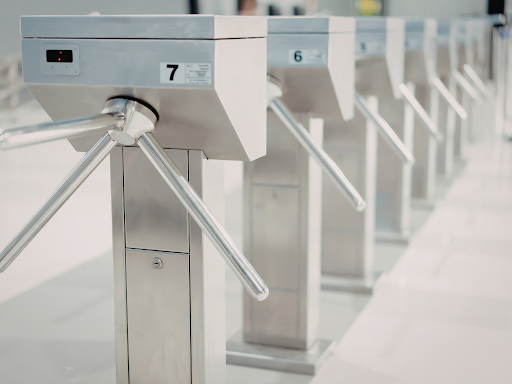
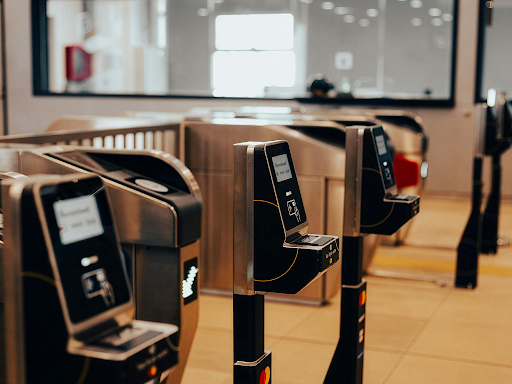
A flap turnstile is an automated pedestrian gate that uses retractable wings, often acrylic or tempered glass, to open and close horizontally after credential validation. Enforce’s live product page describes it as a sleek access control gate commonly used in high-end offices, metro stations, airports, and commercial complexes. That positioning is important because it tells you exactly what this system is for: controlled pedestrian lanes in places where traffic has to be managed without making the entrance feel industrial.
This is where flap turnstiles differ from simpler barriers. They are not just physical blockers. They shape user movement, guide queue formation, and help a building separate authorised entry from visitor handling in a more polished way. In practice, that suits properties where the entrance is busy enough to require structure, but visible enough that bulky hardware would feel out of place.
That combination explains why the system is attractive for office towers, condominium arrival zones, business parks, schools with managed reception, transport-linked commercial spaces, and private facilities with controlled but not overly hostile front-of-house access. A modern lobby entrance does not only need security. It also needs calm movement and a layout people understand immediately.
Office buildings benefit when traffic control and presentation both matter
Flap turnstiles make the most sense in office environments where entry has to be controlled every day, but the building still wants a clean, premium arrival experience. That includes corporate HQs, multi-tenant commercial buildings, co-working hubs, and business park lobbies with regular employee traffic.
The reason is straightforward. Employees usually arrive in waves, often within a narrow morning window. Visitors need a separate path or a supervised check-in flow. Security teams want controlled pedestrian lanes without building a hard physical barrier that makes the lobby feel defensive. A flap turnstile system fits that environment because the lane reads clearly, the retractable wings stay compact, and the overall visual profile is slimmer than many other turnstile formats.
It also works well when the building already relies on credentials such as access cards, mobile credentials, QR passes, or a broader visitor workflow. In those cases, the flap barrier is not acting alone. It becomes part of a wider managed entry system that includes readers, intercoms, reception workflow, CCTV, and in some buildings, lift access logic.
Condominiums need a balance between control and resident comfort
A condo entrance has a different operating pattern from an office lobby. It deals with residents, guests, delivery personnel, contractors, cleaners, and management staff. The system cannot feel too aggressive, but it still has to stop casual entry and give the management team cleaner control over who comes in and how.
This is where a flap barrier Singapore setup can be useful in managed residential developments, especially larger condos with shared facilities, separate lobby zones, or access points where residents and visitors need distinct entry paths. The retractable wing format gives the management corporation a controlled pedestrian lane without turning the condo frontage into something that looks like an industrial checkpoint.
The value is not only aesthetic. It is operational. A flap turnstile can reduce random walk-through traffic, organise visitor flow near the guardhouse or reception point, and support better credential validation for people entering a managed part of the property. Where the condo already uses integrated access logic for side gates, lift lobbies, clubhouse entry, or back-of-house service access, the turnstile becomes part of the broader circulation plan rather than a standalone add-on.
That said, condos should be careful not to over-specify. A flap turnstile works when the site truly needs managed pedestrian access. In a small residential development with low foot traffic and a simple arrival pattern, a different entrance control setup may be more practical.
Managed entrances are where flap turnstiles often outperform simpler gate types
A managed entrance is not just a door with a card reader. It is an entry point where people arrive in mixed groups, where some users are pre-authorised and others are not, and where the property needs a clean separation between public approach space and controlled internal space.
That is exactly where flap turnstiles perform well. They create a defined pedestrian lane. They make users slow down slightly for credential validation. They allow the entrance to look modern without losing clarity. They also help reception or security teams identify exception cases faster because movement is channelled more cleanly.
This is one reason Enforce’s broader turnstile gate control system category includes distinct formats such as flap turnstiles, tripod turnstiles, swing turnstiles, and luxury speed gates. These are not interchangeable product names. They serve different operating environments. A flap turnstile usually fits the middle ground where controlled pedestrian access, reasonable throughput, and aesthetic access control all matter at the same time.
Flap turnstiles are not the right answer for every site
This matters because buyers often assume a neater-looking system is automatically the best upgrade. It is not.
A flap turnstile is usually not the best option for exposed perimeter lines, outdoor industrial compounds, or sites that need hard physical deterrence without constant supervision. Those environments often demand a different product class. A full height turnstile solution is stronger when the site needs a floor-to-ceiling barrier and one-person access enforced through a physically enclosed passage. A luxury speed gate is stronger when the priority is faster flow, broader passage width, and a more premium office-lobby experience.
That is why selection should start with operating condition, not with catalogue preference. A flap turnstile belongs in a managed entrance, not in every entrance.
Throughput, lane behaviour, and visitor flow decide daily performance
The real test of a flap turnstile is not how it looks on installation day. It is how it handles the busiest periods of the week.
In office buildings, that usually means morning peaks. In condos, it may mean evening returns, weekend visitor traffic, or overlapping contractor access. In education or mixed-use sites, it may mean distinct arrival and dismissal windows. The gate has to manage those surges without creating avoidable queueing or confusion.
Flap turnstiles handle this well when the pedestrian lane is clearly planned and the users are reasonably familiar with the credential process. The retractable wings create controlled passage without forcing the user through a bulky rotating barrier. That helps the entrance maintain a smoother feel than a tripod turnstile while still giving security teams a more defined access point than an open door with a reader.
This is also where layout becomes more important than spec sheet language. Lane spacing, stacking space before the reader, visibility of the reader pedestal, adjacent visitor holding space, and the presence of a supervised exception path all affect how well the turnstile performs. A good product installed in a poor layout still gives a poor result.
Credential validation and data handling need real planning
A flap turnstile only performs as well as the credential workflow behind it. If the reader position is awkward, if the QR approval logic is clumsy, or if visitors have to wait at the lane for manual intervention, the turnstile ends up exposing bad process rather than fixing it.
That is why buyers should think through who will use the entrance and how. Residents may use cards or mobile credentials. Staff may use corporate access cards. Visitors may need QR codes, receptionist approval, or intercom confirmation. Contractors may need time-limited access windows. The gate should support those flows clearly rather than force every user type into the same path.
There is also a data-protection angle. Where managed entrances use visitor registration, identity details, or access records, building operators need to align the workflow with Singapore’s PDPA obligations. PDPC stated in February 2026 that private organisations should phase out the use of NRIC numbers for authentication by 31 December 2026. For properties still relying on outdated visitor or access practices, that matters directly when designing credential validation at the entrance.
Accessibility and egress have to be resolved before installation
A flap barrier cannot be planned in isolation from circulation design. Singapore’s Code on Accessibility in the Built Environment states that accessibility and usability should be integrated into the overall design from the start, and the Code applies to new buildings as well as existing buildings undergoing addition and alteration works. That means a managed entrance using flap turnstiles still needs a compliant accessible path and a circulation plan that works for more than able-bodied cardholders.
This is especially relevant for condos, offices, and mixed-use properties where residents, elderly users, wheelchair users, parents with strollers, visitors with luggage, and contractors with items may all approach the same general entry zone. A narrow, neat-looking turnstile line is not enough if the site has no clear alternate path or creates awkward diversion at the busiest point of arrival.
Egress planning matters too. SCDF’s advisory on installation of gates and turnstiles in buildings states that gates and turnstiles along egress paths affect means of escape and are subject to approval requirements. In plain terms, a managed pedestrian access system cannot undermine safe exit strategy. The security brief and the fire-safety brief have to be resolved together.
Installation quality shows up quickly on managed entrances
Flap turnstiles are unforgiving when installation quality is poor. Misaligned wings, badly positioned readers, messy wiring protection, weak integration with access control, or poor adjacent-lane planning all show up quickly because the system sits in a visible, heavily used part of the property.
That is why installer capability matters. Enforce’s automatic gate contractor Singapore vs general contractor article makes a useful point here. A specialist installer thinks about integration, compliance, control logic, and long-term servicing differently from a general contractor handling the gate line as one more package item. On managed entrances, that difference is often visible within the first few weeks of operation.
A practical selection framework keeps the choice clear
A flap turnstile usually makes sense when these conditions are true:
- The entrance is managed rather than exposed perimeter access
- The property needs controlled pedestrian lanes without a harsh physical barrier
- Visitor flow, resident flow, or employee flow needs to be organised clearly
- The site values modern lobby presentation alongside security
- The turnstile can be integrated with a proper credential workflow
A flap turnstile is usually the wrong answer when these conditions dominate:
- The site needs hard perimeter deterrence
- Outdoor or semi-outdoor exposure is high
- The access point is largely unsupervised
- The environment is industrial and function-first
- The project lacks a compliant alternate accessible path
That is the right way to think about flap barrier Singapore projects. The question is not whether the product looks modern. The question is whether the site is a managed entrance where controlled pedestrian access and cleaner user flow matter every day.
Conclusion
Flap turnstiles work best in places that need structure without turning the entrance into a hard security checkpoint. Office buildings, larger condos, and managed entry zones are usually the strongest fit because they need controlled pedestrian lanes, clearer visitor flow, and a more polished arrival experience.
If you are planning a lobby access control gate in Singapore, speak to Enforce about the traffic pattern, credential workflow, and circulation layout first. That is what determines whether a flap turnstile is the right system for the property.
FAQs About Flap Turnstile Singapore
What is a flap turnstile used for in Singapore?
A flap turnstile is used for managed pedestrian access in places like offices, condos, transport-linked properties, and commercial entrances. It uses retractable wings to control passage after credential validation.
Is a flap turnstile better than a speed gate?
Not always. A flap turnstile suits managed entrances that need controlled lanes and a compact footprint. A speed gate is often better for higher-end office lobbies that want faster flow and a more premium arrival experience.
Can flap turnstiles be used in condominiums?
Yes, especially in larger condos with managed entrances, visitor control needs, and shared facility zones. They are most useful where resident flow and visitor handling need to be separated more clearly.
Do flap turnstiles need an accessible alternative?
Yes. BCA’s accessibility code means properties still need a compliant route for users who cannot use the controlled pedestrian lane.
Do flap turnstiles affect fire-safety planning?
Yes. SCDF states that gates and turnstiles along egress paths affect means of escape, so emergency release and approval requirements must be addressed during design.