

Tripod Turnstile Singapore: Factory and Worksite Guide
Most buildings that buy a tripod turnstile Singapore unit do not need a luxury speed gate. They need a cheap, durable, deterrent-grade access point that handles 200 to 500 daily passages without complaint. This blog will walk you through where tripod turnstiles earn their place, how to specify one correctly, and the limits worth knowing before you buy.
What a tripod turnstile actually is
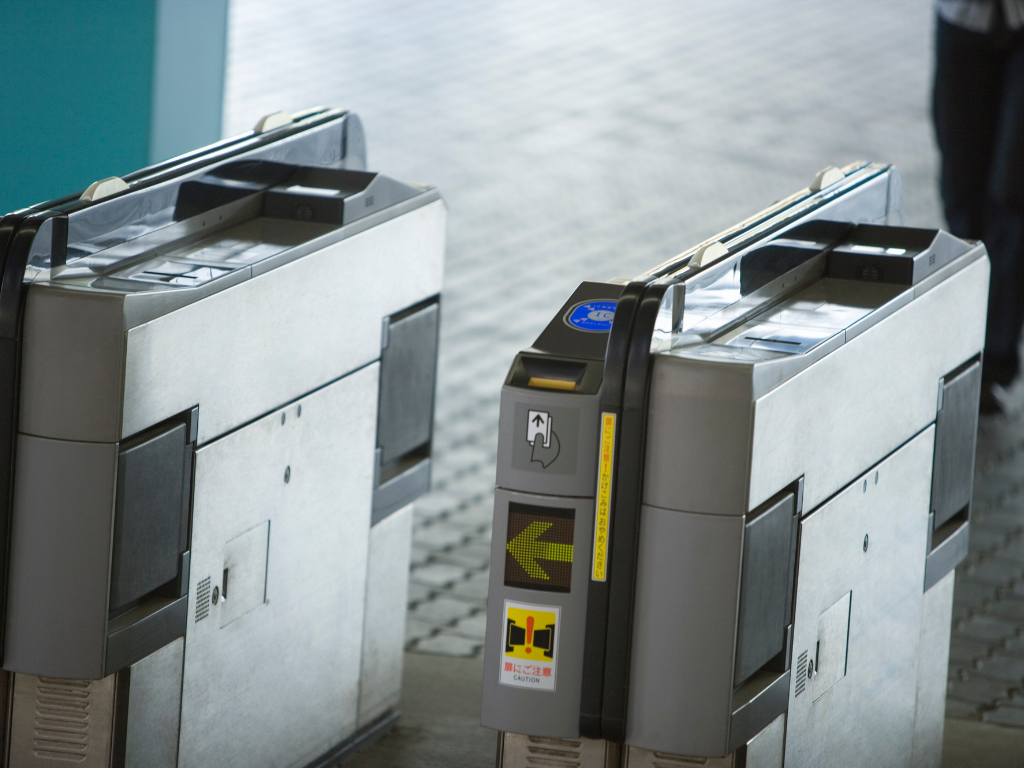
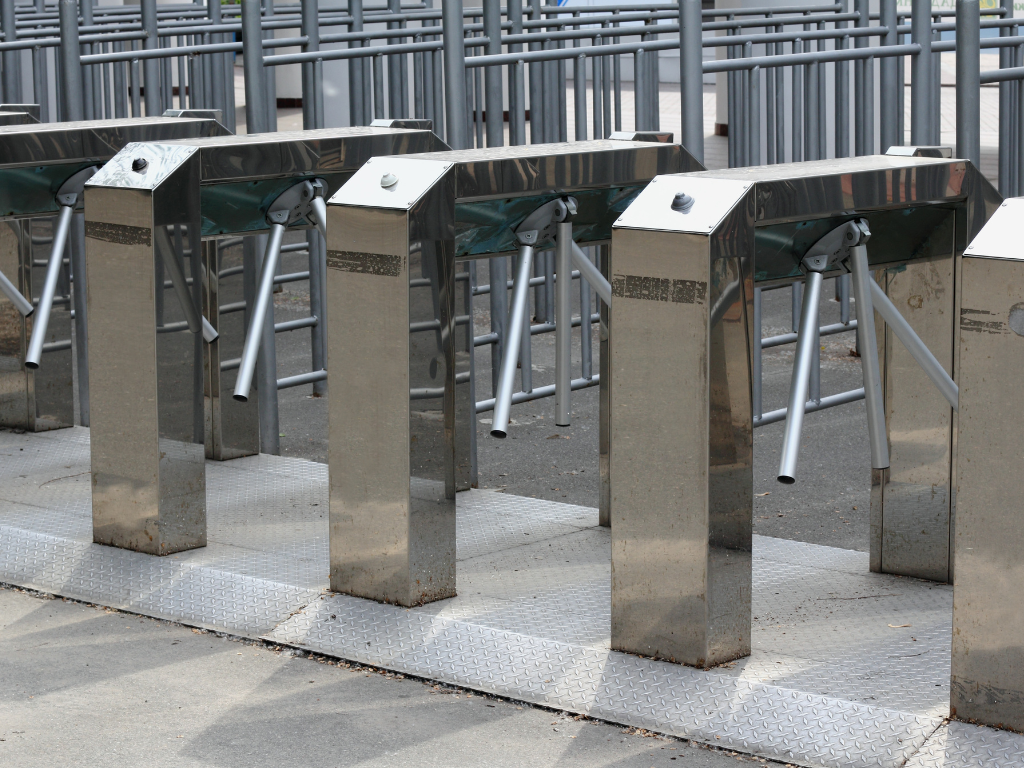
A tripod turnstile in Singapore is a waist-height access point with a three-arm rotor mounted on a central post. When a credential is accepted, the rotor releases and rotates 90 degrees, letting one person through. Mechanical anti-reversal in the rotor mechanism means a person who passes through cannot push back, which is the simple security feature that gives the tripod most of its value. The housing is typically brushed stainless steel, the rotor arms are 500mm long stainless tubes, and the whole assembly sits in roughly 0.3 square metres of floor space.
The product earns its reputation as the workhorse of the turnstile family for one reason: low parts count. There is one motor, one rotor, three arms, and a control board. Nothing else. That simplicity is the entire commercial argument for a tripod, and it shows up in price, in install time, and in the mean time between failures.
Where tripod turnstiles dominate in Singapore
Three settings buy more tripod turnstiles than the rest of the market combined.
Factory perimeters
Manufacturing sites in Tuas, Jurong, and Tampines run shift patterns where 200 to 800 workers pass through a single perimeter gate over 30 minutes at shift change. A tripod turnstile sits there, integrated with the access control system, logging every entry and every exit. Worker safety is a regulated obligation under Singapore’s Workplace Safety and Health legislation administered by the Ministry of Manpower, and the turnstile’s log becomes the foundation of the worksite headcount that an emergency response would rely on. A flap or speed gate at this kind of site is overkill. A full-height cage works but costs three times more. The tripod sits in the middle, and on factory floors it has been the default for two decades.
Construction worksites
Construction sites use tripod turnstiles paired with biometric or RFID readers to enforce that only certified workers (BizSAFE-trained, with valid CSOC and CSCS cards) enter the site. The same turnstile log feeds the contractor’s daily attendance report and the WSH officer’s records of who was on site during any incident. A tripod is the right tool here because the environment is dusty, sometimes wet, sometimes muddy, and a more delicate flap turnstile would be off-line within a fortnight. The tripod’s mechanical simplicity means it survives.
Cost-sensitive lobbies
Gyms, training centres, dormitory entrances, university buildings, and small commercial premises run on thin margins and need access control that simply works. A tripod handles these settings on price, on durability, and on visual deterrent. Members understand that they tap a card and walk through. Any failure mode is obvious within a glance, which makes self-service operation realistic in a way that a flap turnstile never quite achieves.
Specifying the right tripod for your site
Four decisions drive whether the unit performs as expected over a five-year horizon.
Manual, semi-automatic, or fully automatic mode
A manual tripod has no motor. The rotor releases on credential read but the user pushes the arm to rotate it. A semi-automatic tripod adds a return-to-origin motor that brings the rotor back to centre after a person passes, but the rotation itself is still manual. A fully automatic tripod has motorized rotation: the rotor moves through the 90-degree arc by itself once the credential clears.
For Singapore factory sites with high cycle counts (above 1,000 passages per day per lane), the fully automatic version is worth the extra SGD 600 to SGD 800 per unit. Lower-traffic lobbies can run a semi-automatic tripod for years without complaint.
Drop-arm fallback
A drop-arm fallback is a feature that drops the rotor arms into a vertical position when power is lost or when the fire alarm triggers. The lane becomes physically clear, and free egress is guaranteed. This is non-negotiable for any tripod installed in a public egress route. The control board’s relay input ties to the fire alarm panel, and the drop-arm mechanism is mechanically biased so it works even with full power loss. Specifying drop-arm fallback at procurement adds a small premium and removes the largest life-safety risk a turnstile can pose.
The principles for fail-safe behaviour on powered pedestrian gates are documented in the UK Health and Safety Executive’s powered-gates safety guidance, which Singapore installers reference when commissioning the fail-safe sequence.
Three-arm rotor and 90-degree rotation geometry
The standard three-arm rotor sits at 120 degrees between arms, but only 90 degrees of rotation is needed for one passage. After release, the rotor spins through 90 degrees and a fresh arm presents at the entry side. Specifying the rotation angle matters when the lane has tight wall clearance, because the longer 500mm arm needs free space on both sides during the swing. Lane width should be 550mm to 600mm minimum between any obstruction and the rotor centreline.
Counter-rotation prevention should also be confirmed at commissioning. With it, the rotor cannot be physically pushed against direction. Without it, anyone strong enough can defeat the unit by force.
Brushed stainless housing and IP rating
Most Singapore tripod installs use a brushed 304 stainless steel housing because it tolerates the climate, resists fingerprints, and looks clean for a decade with no maintenance. For outdoor or coastal sites, 316 stainless is the right call because of salt resistance. IP rating depends on the install location: IP54 for indoor lobbies, IP65 for sheltered outdoor or covered factory entrances, IP66 for fully exposed outdoor positions where heavy rain hits the housing directly.
Where a tripod turnstile falls short
A tripod is a deterrent, not a hard barrier. Three honest limits matter.
The first is that the rotor sits at waist height, around 1,000mm. A reasonably fit person can climb over the arms in three seconds. This is not a security failure of the product; it is the design. If your threat model includes a determined intruder, a tripod is the wrong choice and you should be reading about full-height turnstiles instead.
The second is that the lane width is too narrow for a wheelchair, a trolley, or a person carrying a large box. There is no accessibility-compliant version of a tripod. Sites that need accessibility need to pair a tripod bank with at least one swing turnstile, and that decision should be made at design stage, not retrofitted later.
The third is that tailgating is easier than on a flap or speed gate. The optical sensors on a flap unit catch a second person attempting to enter on one credential. A tripod has no equivalent. If anti-tailgating is a real requirement (data centres, secure offices, regulated facilities), a tripod will not give you what you need. The broader comparison of all seven turnstile types lays out where each fits, and the tripod’s limits are the honest reason to pick a different type when the security profile demands it.
Integration with attendance and access control
A tripod turnstile is one node in a building’s access control system. The reader on the housing reads the credential, the controller decides whether to release the rotor, and the event is logged centrally. A solid Singapore stack pairs the tripod with Soyal or ZKTeco access control, since both brands have mature firmware for tripod-specific features and direct integration with HR attendance systems.
Attendance integration is the feature that pays for itself fast. The turnstile log feeds shift attendance reports automatically, eliminating the time the HR team spends reconciling sign-in sheets. Most Singapore manufacturers run this kind of automated payroll input on a SAP, Workday, or local HRMS backend, and the turnstile sits at the front of that data flow.
A worksite or factory tripod also benefits from a written maintenance schedule. The motorized rotation mechanism, the credential reader, the rotor bearings, and the drop-arm release all wear over time. A reasonable after-sales service plan covers twice-yearly preventive maintenance, with a documented inspection of each of those points and a replacement budget for parts that fail.
Conclusion
A tripod turnstile is the right tool when the entry profile is clear: high cycle counts, deterrent-grade security, no accessibility lane, no anti-tailgating obligation, and a reasonable budget. Specify the rotation mode, the drop-arm fallback, the IP rating, and the integration with the existing access control, and the unit becomes invisible in the way working infrastructure should. Pick the wrong turnstile type for a site that actually needs flap, swing, or full-height geometry, and the tripod becomes the wrong purchase regardless of how well it is built.
Speak to the Enforce team for a site survey on your factory, worksite, or commercial lobby, and get a tripod turnstile specification grounded in your traffic, your budget, and your existing access control.
Frequently asked questions
How many people per minute can a tripod turnstile handle?
A standard tripod handles 25 to 30 persons per minute under normal operation. Throughput is mechanically limited by the rotor’s 90-degree rotation cycle, which takes around 2 seconds end to end. For a Singapore factory with 600 workers entering across a 30-minute shift change, two tripod lanes are usually sufficient. Add a third for safety margin during peak movements.
Is a tripod turnstile suitable for outdoor use in Singapore?
Yes, with the right IP rating and stainless steel grade. An IP65 housing in 304 stainless handles sheltered outdoor positions like a covered factory entrance. For fully exposed positions or coastal sites, 316 stainless and IP66 are the right specifications. A tripod outside without proper sealing will see corrosion within two monsoon seasons.
Can a tripod turnstile integrate with biometric attendance?
Yes. The reader on the housing accepts RFID, fingerprint, or face recognition credentials, and the access control controller logs every event with a timestamp. The log feeds the building’s attendance system for automated shift reporting, which is the single most useful integration in a factory or worksite setting. Confirm reader compatibility with your existing HR backend before purchase.
What is the cost difference between a tripod and a flap turnstile?
A standard tripod turnstile in Singapore retails between SGD 1,500 and SGD 3,500 depending on rotor mechanism, housing material, and reader integration. A comparable flap turnstile starts around SGD 5,500 and runs to SGD 12,000 for premium speed gates. The price gap reflects mechanical complexity and throughput. For a deterrent-grade lane, the tripod gives 80 percent of the security benefit at 30 percent of the cost.
Does a tripod turnstile need to fail-safe during a fire alarm?
Yes, on any tripod installed in a public egress route. The drop-arm fallback feature drops the rotor arms vertical when the fire alarm panel triggers the relay input, leaving the lane clear for evacuation. This must be tested at commissioning with the actual fire panel, not assumed from a brochure setting, and the test result should appear on the handover certificate.