

Automatic Door Company Singapore: Vet the Service
Choosing an automatic door company in Singapore is a ten-year service decision disguised as a one-time purchase. The international standard for these systems, ANSI/BHMA A156.10, recommends at least annual professional inspection, and a commercial door cycles thousands of times a month. This blog walks you through vetting a supplier on what matters after the invoice clears, across automatic door systems and service.
What separates a real automatic door company from a reseller?
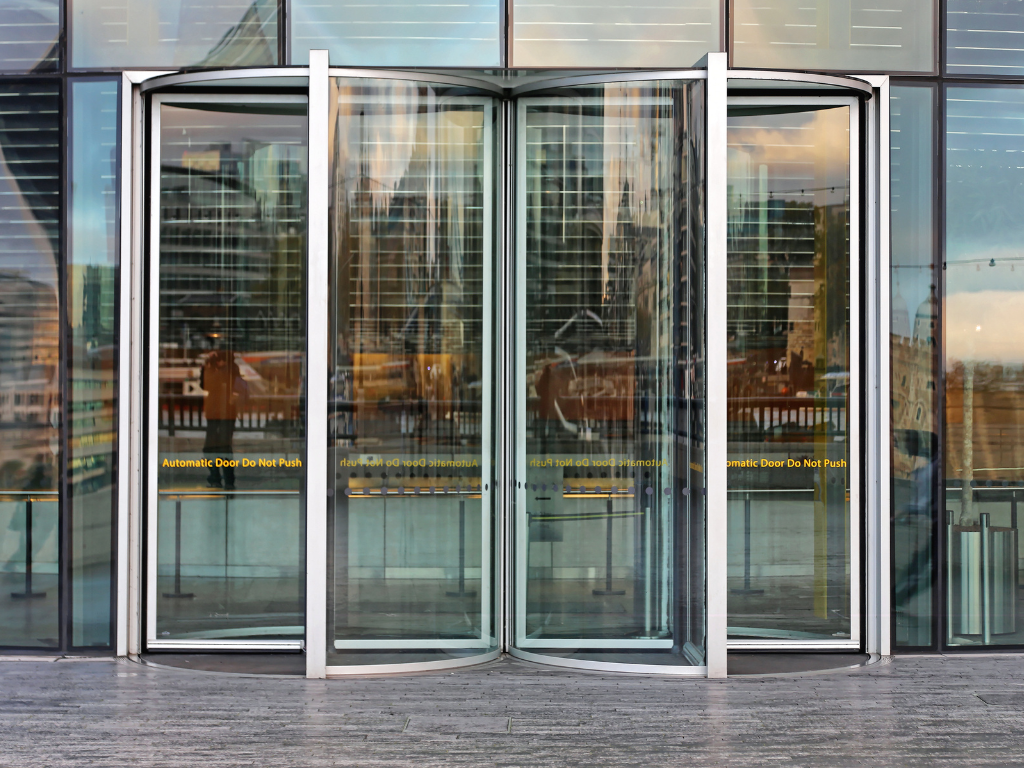
A real automatic door company supplies, installs and maintains the system under one roof; a reseller sells you a door and disappears when it jams. The difference shows up the first time a sensor fails, not at the point of sale.
The test is whether the same firm that quoted the door also employs the technicians who service it. A genuine provider like Enforce Automatic Global Pte Ltd runs supply, installation and maintenance as one operation, so accountability does not fracture across vendors. A reseller forwards your job to a subcontractor, marks it up, and has no service desk when the door stops. How installation quality is judged is a separate question worth reading, but the structural point is simpler: the company that installs your door should be the company you can call in year three when it needs parts.
Why does after-sales service matter more than the purchase price?
After-sales service matters more than purchase price because the door’s lifetime cost is dominated by maintenance, parts and downtime, not the initial install. A commercial automatic sliding door runs for 10 to 15 years, and across that span the service relationship costs more than the hardware did.
Price-led buying is where this goes wrong. A door bought purely on the lowest quote, with no service plan, becomes the most expensive option the first time it fails during business hours and nobody answers the phone. The installation cost is the visible number; the invisible number is a stuck clinic or retail entrance losing footfall while a repair gets scheduled. The cleaner approach is to weigh the service capability first and treat the hardware quote as secondary. A door is infrastructure, and infrastructure is judged on uptime over years, not on the day-one price.
What response-time SLA should you expect for a stuck commercial door?
For a commercial automatic door that has failed, expect a response-time SLA measured in hours, not days, and get it in writing. A jammed mall, clinic or office entrance is a same-day operational and safety problem, since it blocks accessible access and can obstruct an egress route.
Ask the supplier to state the SLA explicitly: how fast a technician reaches site for a door-down call, and what the after-hours arrangement is. A credible provider commits to a defined response window and staffs to meet it; a vague “we’ll send someone” is the answer to avoid. Worth noting: the response time only means something if the technician arrives with the right part, which is why the SLA and the spare-parts question are inseparable. A four-hour response that ends in “we need to order the part” is not a four-hour fix.
How do you check spare-parts and motor-brand parts availability?
Check whether the supplier stocks parts for your specific door operator brand locally, because parts availability decides whether a fault is a same-week repair or a forced replacement. The single most expensive failure mode in this industry is an orphaned motor: a door whose operator brand the supplier no longer carries.
Ask which motor brands the company stocks and services, and confirm those parts sit in a Singapore inventory rather than on a multi-week import. A door built around a well-supported operator ecosystem can have a failed controller swapped quickly, while a door running an unsupported import can need the whole drive replaced for a single dead component. This is why the choice of automatic sliding door options should account for parts support, not just the door’s appearance. A $400 controller that cannot be sourced turns into a four-figure replacement. Parts availability is a buying criterion, not an afterthought.
What should an automatic door warranty actually cover?
A useful automatic door warranty separates parts from labour and states the period for each, because a vague “one-year warranty” often excludes the labour that makes a claim worth anything. Read what is covered, for how long, and what voids it.
The detail that matters: many warranties cover the motor for a period but charge labour on every visit, or void coverage if a non-certified technician touches the door. A clear warranty states the parts term, the labour term, and the service conditions in plain language. Worth noting: the standard explicitly warns that unqualified repairs can void warranties and compromise safety, which is another reason single-source service beats a cheap third-party fix. Get the warranty terms before signing, not after the first fault, when the exclusions become expensive surprises.
How often must a commercial automatic door be serviced?
A commercial automatic door should be professionally inspected at least once a year, and more often on high-traffic entrances. The governing reference, ANSI/BHMA A156.10, sets the safety performance criteria, and the industry body AAADM publishes the inspection cadence.
Annual is the floor, not the target. Published annual inspection guidance recommends planned maintenance plus a yearly certified inspection, with higher frequency for buildings with heavy pedestrian volume. The failure modes that inspection catches are sensor drift, motor wear and loosening hardware, all of which compound through operating cycles into a sudden door-down event. Working to the ANSI A156.10 door standard is the benchmark a serious provider holds, alongside Singapore’s BCA accessibility and SCDF egress requirements. A high-traffic mall entrance serviced once a year is under-maintained, and the repair bill eventually proves it.
What does a maintenance contract include, and is it worth it?
A maintenance contract bundles scheduled preventive visits, priority response and often parts discounts into a fixed annual fee, and for any commercial door it is worth it. The contract converts unpredictable breakdown costs into a planned operating expense.
A proper contract specifies visit frequency, the response-time SLA for faults between visits, and whether parts are included or discounted. For a building running several entrances, this also covers wider commercial layouts like wide commercial entrance setups under one agreement. The value is not just the discount; it is that a contracted provider knows your specific doors, holds your parts, and answers first. Where this breaks down is a contract that lists visits but stays silent on response time, so read the SLA clause before the visit schedule. A maintenance contract without a defined response window is a calendar, not a guarantee.
What questions should you ask before signing with a supplier?
Ask five questions before signing: who installs versus who services, what the door-down response SLA is, which motor brands they stock locally, what the parts and labour warranty covers, and whether they hold the relevant safety and accessibility competencies. The answers separate a service partner from a one-time seller.
A credible automatic door company answers all five without hesitating, because it operates supply, installation and maintenance as one integrated business across residential, commercial and institutional sites. Enforce Automatic Global Pte Ltd is structured that way, which is the practical argument for single-source accountability: when one firm owns the whole lifecycle, there is no blame-shifting between a supplier, an installer and a maintainer when a door fails. The supplier that cannot answer the response-time and parts questions clearly is telling you how the next decade of service will go.
Conclusion
The lowest quote almost never wins on an automatic door, because the decision is really about who answers when the door fails three years in. Vet the company on its response-time SLA, its local spare-parts stocking, its warranty terms, and whether one firm owns supply, installation and maintenance together. Those four answers predict your next decade of uptime far better than the hardware price does.
Running commercial entrances that need reliable uptime? Ask Enforce for a maintenance and service-level proposal covering response time, parts support and scheduled inspection for your automatic doors.
Frequently asked questions
Should I choose a supplier-only company or one that also installs and maintains?
Choose a company that supplies, installs and maintains under one roof. Single-source accountability removes the blame-shifting that happens when three vendors touch one door, and it means the firm servicing your automatic door in year five is the one that knows how it was installed. Enforce operates all three functions as one business.
What happens to my door if the company stops stocking the motor?
An orphaned motor brand is the most expensive failure in automatic doors, because a single dead controller can force a full drive replacement when parts are unavailable. Before buying, confirm the supplier stocks your operator brand in a Singapore inventory, so a fault is a same-week repair rather than a four-figure replacement.
How often does an automatic door legally need servicing in Singapore?
The international standard ANSI/BHMA A156.10 and the AAADM body recommend at least annual professional inspection, with higher frequency for high-traffic doors. In Singapore, BCA accessibility and SCDF egress requirements also apply to commercial entrances, so doors on escape routes carry additional compliance obligations beyond routine servicing.