

Convert Manual Door to Automatic Singapore: 6 Checks
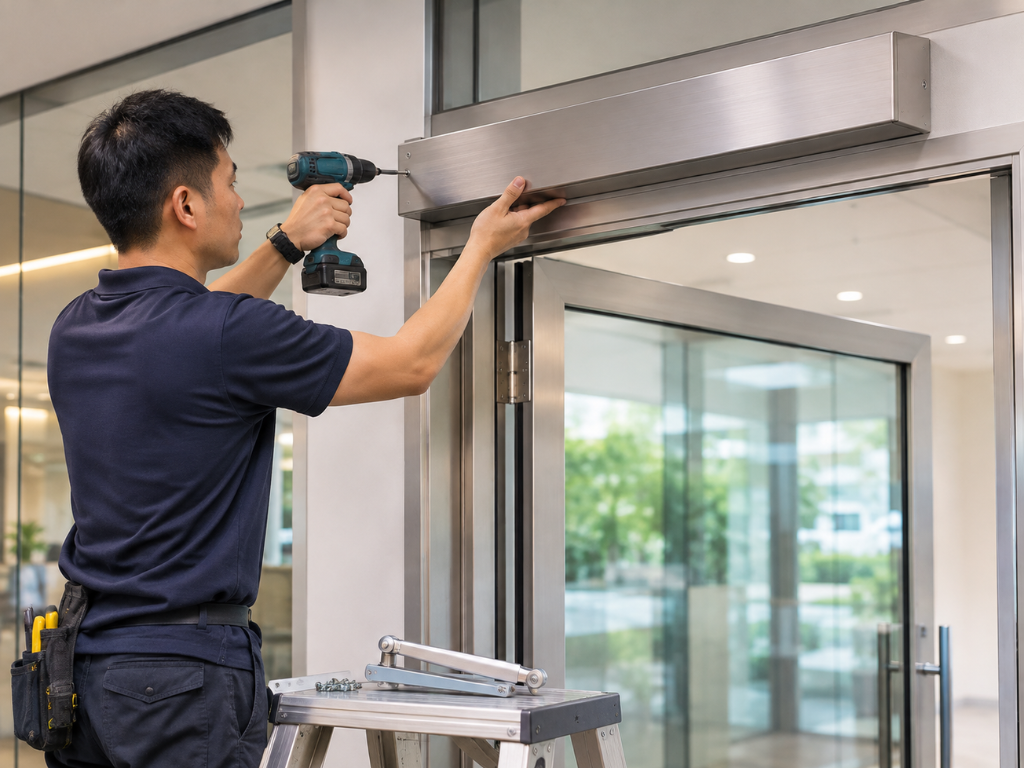
Yes, you can convert a manual door to automatic in Singapore without replacing it, as long as the hinges, frame and leaf weight can take an operator. That suits tenants and building owners who want an automatic entrance without ripping out a door that works. At Enforce Automatics Global in Singapore, we fit the operators on our automatic swing door range, which turns existing manual swing doors into automatic entrances.
Can you convert a manual door to automatic in Singapore, and what decides it?
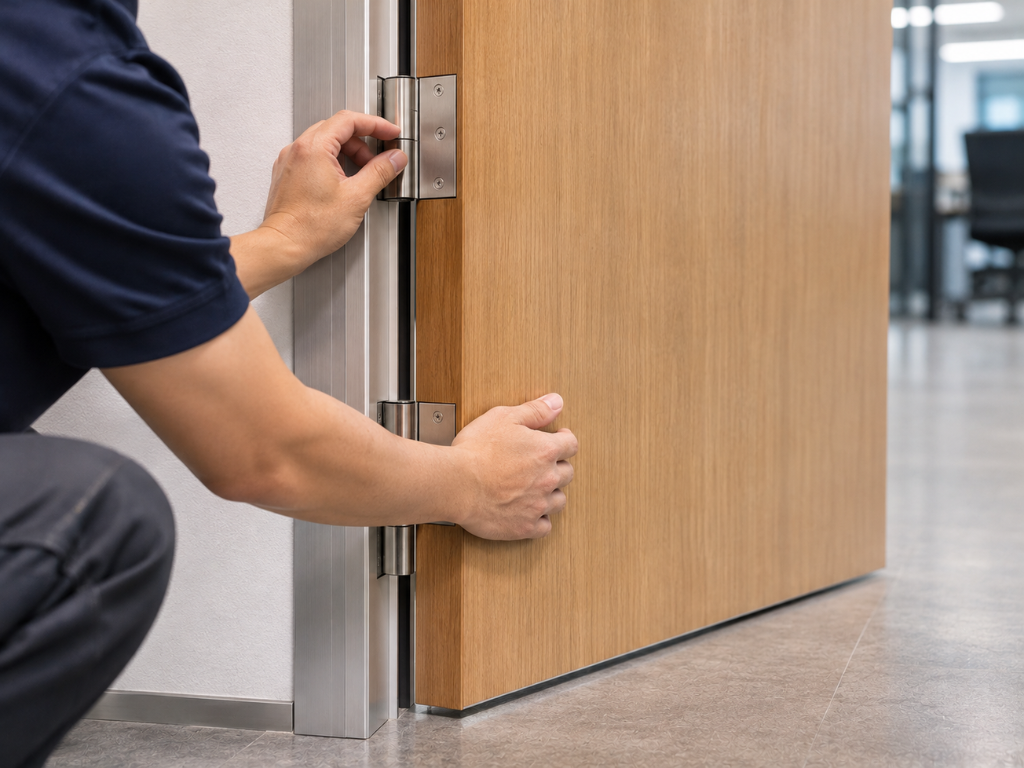
Six checks decide whether your door can take an operator, and a door that passes all six usually only needs a surface arm fitted to the frame. If you haven’t picked the operator type yet, our advice on surface arm, top concealed and floor concealed operators covers that choice.
|
Check |
Passes |
Needs work or fails |
|
Existing hinges or pivot |
Door swings freely, no sag, no rub on the floor |
Dropped leaf, worn hinges, a door you have to lift to close |
|
Frame fixing |
Solid aluminium, steel or timber head above the door |
Plasterboard, thin glass or nothing above the door |
|
Leaf weight and width |
Within the operator’s rating with room to spare |
Heavier than any operator on the range can move |
|
Overhead door closer |
Comes off cleanly |
Closer built into the frame or a floor spring under the door |
|
Lock and latch |
No latch, or a lock that can be released by signal |
A keyed latch that has to stay |
|
Power point |
A socket or spur near the door head |
No power within reach of the door |
The door doesn’t need to be new. It needs to move easily by hand and hang straight, because an operator automates a good door and exposes a bad one. If it drags, sticks or slams today, fix that first or plan to replace it.
Which existing doors take an automatic opener easily, and which don’t?
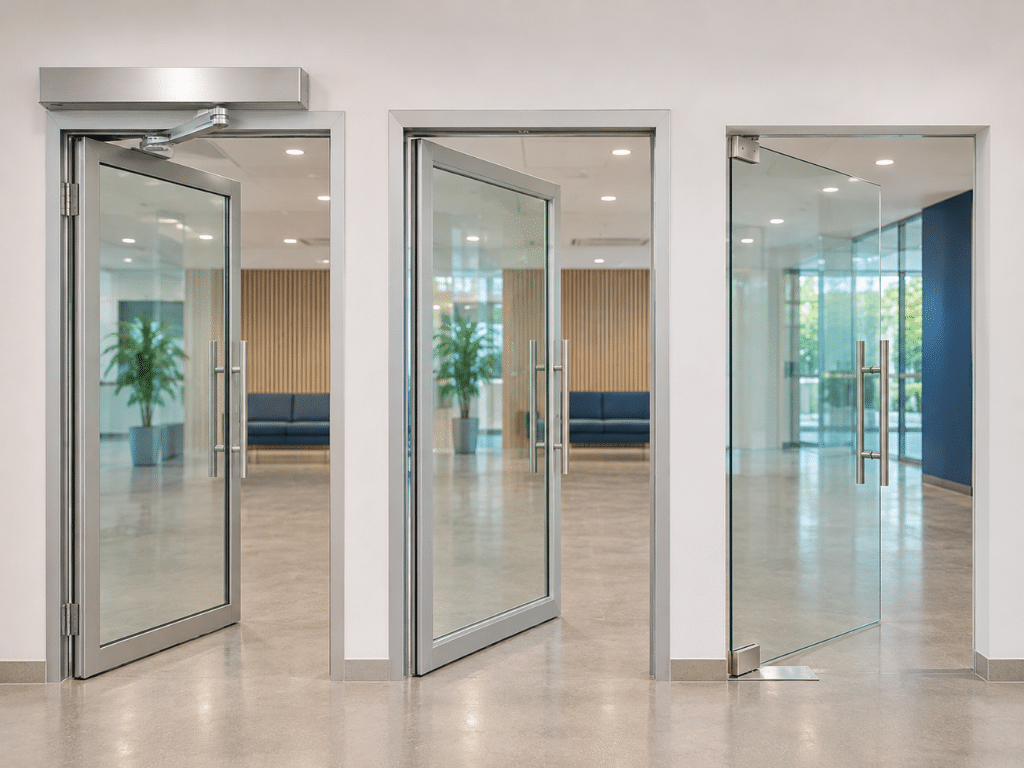
A framed aluminium or solid timber door with a strong head above it takes an automatic opener easily. Frameless glass, very heavy doors and fire doors need more thought.
Framed aluminium is the easy case.
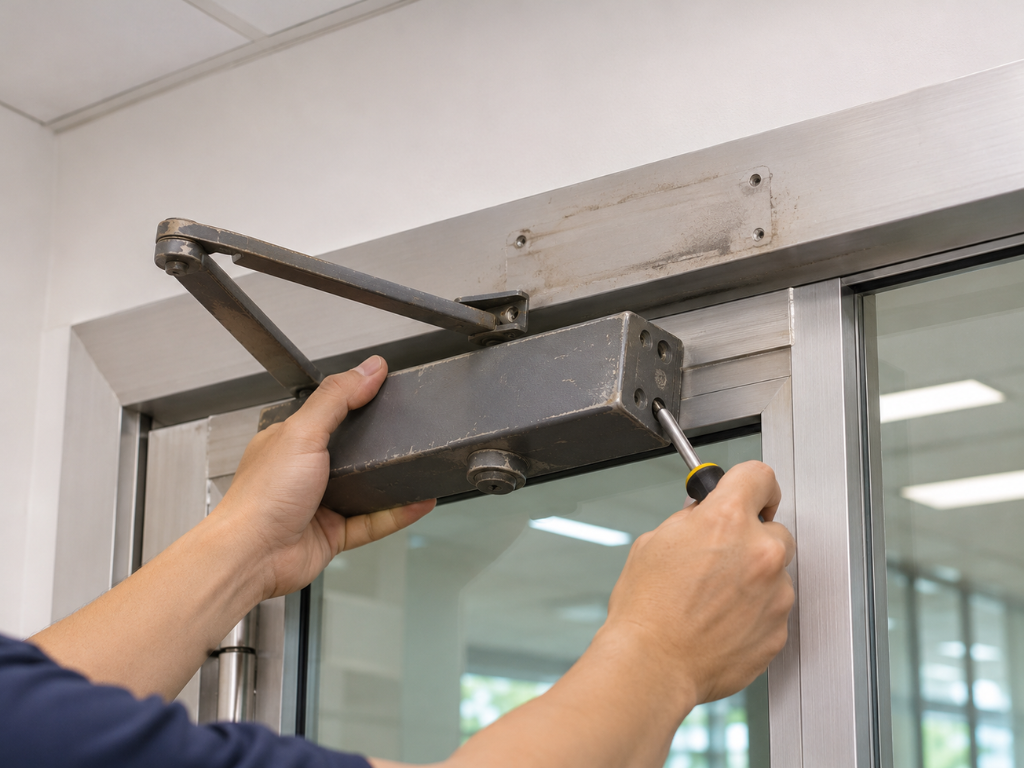
The surface arm retrofit fixes the operator box to the frame head and the arm to the door, with no hacking. Solid timber doors work the same way, provided the frame is sound. Our Auto Swing Arm range covers leaves up to 200 kg on the Ditec DAB105 and up to 450 kg on the DAB305. Weight is rarely the blocker on a framed door.
Frameless glass on patch fittings, the metal clamps at the glass corners, is harder. If there’s a glass or aluminium overpanel above the door, a surface operator may fix to it. If there’s nothing above, the operator goes in the floor, like our EF U200A floor concealed operator for doors up to 150 kg. That means opening up the floor.
Fire doors can take an operator, but it must be rated for fire doors and let the door close itself. Treat a fire door as a job for your QP as well as us.
What happens to the existing door closer and lock?
The existing overhead door closer comes off, because the operator does the closing. The lock has to be either removed, kept unlatched, or swapped for one the operator can release.
Leave the old closer on and the two fight each other. The operator strains to open against the closer’s spring, the door slows, and both wear out early. A floor spring under a glass door is the same problem in a harder place, so plan to remove or replace it.
The lockset conflict catches more people out. If the latch stays engaged, the operator pushes against a locked door. For a door that stays open during business hours, a dead latch or pull handle is enough. For a door that locks at night or needs card entry, fit an electric strike or magnetic lock that releases before the operator opens. Plan it with your access control set-up.
On an escape route, that magnetic lock must release directly from the building fire alarm. The door must also push open by hand at no more than 30 N. Both rules sit in Clause 2.3.9 of the SCDF Fire Code 2023.
Where do the power point and controller go on an automatic door retrofit?
You need a power point near the door head. On a surface arm, the controller sits inside the operator box, so there’s no separate cabinet to find room for.
If there’s a socket or spur within reach of the door head, the electrical side is small. If the nearest power is across the room, a cable has to be run and concealed, which adds trunking or some making good. Get that priced before you agree a figure, because it’s the line that tends to grow on retrofits.
Ask about the controller position on concealed units. A top concealed operator hides in the header, and a floor unit needs its control gear somewhere reachable for servicing. On a main entrance, add the battery kit the Ditec DAB range takes, so a power trip doesn’t leave you with a heavy manual door.
When does replacing the door beat an automatic door retrofit in Singapore?
Replace the door when fixing it costs more than the door is worth, or when the opening itself fails the rules you’re renovating for.
Signs the door should go rather than be automated:
- The leaf has dropped or warped and rubs no matter how the hinges are set
- The frame is loose, rotten or fixed into a wall that won’t hold screws
- The leaf is heavier than the operator range can move
- The clear opening is under 850 mm and the works need BCA plan approval
- It’s on an escape route but swings the wrong way for the room’s occupant load
That 850 mm figure comes from the Code on Accessibility 2025, which applies when your works go to BCA. In that case the door also needs a hold-open of at least 5 seconds and a sensor that detects people in its closing area. A narrow old door can’t be widened by adding an operator, so a new door or an automatic sliding door may be the cheaper route.
How do you convert a door in an occupied building without downtime?
Book the work for a quiet day or after hours, and keep the door usable by hand until the operator is tested. A surface arm retrofit doesn’t need the door out of its frame, so the opening stays usable through the job.
The noisy part is drilling the frame and running the cable. Do that first, outside opening hours if you can, then fit the operator and set it up. Set the opening speed, hold-open time and closing force at commissioning, and walk the door with the people who use it before you sign off.
For a clinic or office that can’t close, agree the sequence with building management first, because drilling and cable runs in common areas usually need their approval.
For a straight answer on your door, send us photos of the door, the frame head above it and the hinges. Add the leaf size, its material and whether it’s on an escape route. Show us where the nearest power point is too.
What we’d do with your door
If your door swings freely, sits in a solid frame and is within the weight range, we’d fit a surface arm operator. We’d remove the old closer and sort the lock first.
If it drags, sits on patch fittings with nothing above, or fails the 850 mm opening, we’d talk about a new door instead. To confirm, we need photos of the door, frame head, hinges and nearest power point. Book a free site survey and we’ll check it on site.
FAQs About Convert Manual Door To Automatic Singapore
Can I convert a double swing door to automatic?
Yes, with an operator on each leaf, set to open together and close in the right order. Each leaf is checked on its own for hinges, weight and closer, because the two are rarely identical. Both surface operators can often share one frame head if it’s long and solid enough.
Can a home door or HDB door be made automatic?
Technically yes, but it’s rarely worth it for a flat or house door unless someone in the home has trouble opening doors. The main entrance usually locks with a keyed or digital lock, so the lock and operator have to be planned together. Enforce plans the lock first, then the operator.
How much does it cost to convert a manual door to automatic?
A surface arm on a sound existing door is the cheapest way to get an automatic door, because you keep the door and frame. Enforce’s published range starts at about SGD 4,000 to 6,500 for a simpler commercial entrance. Power runs, lock changes and frame repairs push it up, so a site survey sets the figure.