

Boom Gate Singapore vs Lot Blocker for 2026
If you are comparing a boom gate Singapore setup with a lot blocker, the right answer depends on traffic flow, access rights, and how your parking area is actually used. This blog will walk you through where each system fits, what usually goes wrong when the wrong one is chosen, and how to match the hardware to your property’s real parking behaviour.
For many sites, the choice is not just about stopping cars. It is about whether you are controlling an entrance, protecting one reserved bay, or building a system that ties into automatic gate installation and autogate repair solutions and wider site security.
What is the real difference between a boom gate and a carpark lot blocker?
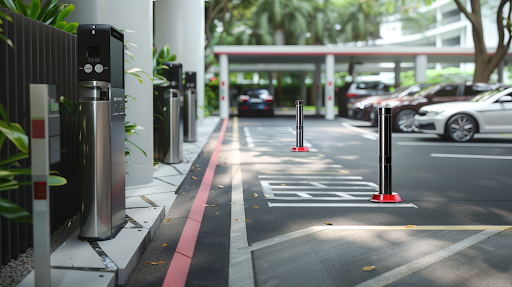
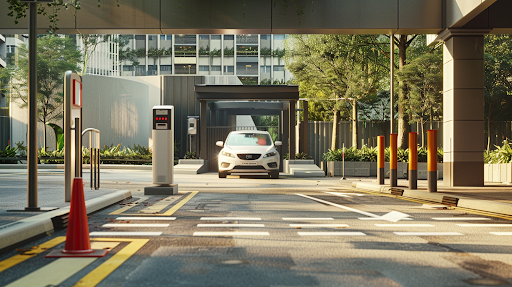
A boom gate controls vehicle access at a lane, entry point, or exit point. It uses a barrier arm, motor, control board, safety sensor, and trigger method such as RFID, remote control, loop detector, keypad, QR code, or card access. In practice, it is built for shared circulation and repeated opening cycles. Enforce’s live product category describes automatic barrier gantries as systems used to control entry and exit of vehicles in restricted areas, often integrated with carpark, payment, and access control systems for smoother flow.
A carpark lot blocker protects a single parking bay. Most are fold down blockers fixed directly to the lot surface. The purpose is narrower: stop unauthorized parking in one reserved space when the lot owner or tenant is away. It is less about site wide traffic flow and more about preserving a specific parking right.
That distinction matters. A condo driveway, office entrance, or warehouse access road usually needs lane control. A reserved bay for a director, tenant, or unit owner usually needs space level protection. Treating those two problems as the same is where many projects go off track.
When does a boom gate make more sense?
Shared carparks with constant movement
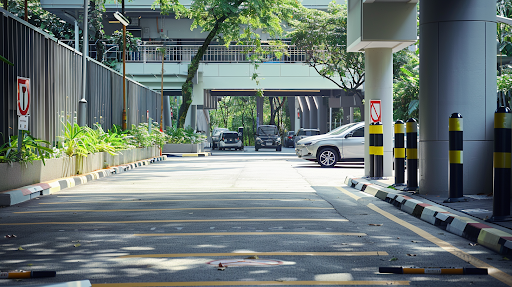
A boom gate is usually the right fit when multiple vehicles need controlled access through one lane. Think condominium carparks, office buildings, commercial developments, schools, factories, and institutional sites. In these environments, the core problem is not a single unauthorized parker. The real issue is unmanaged entry and exit.
A barrier arm works because it creates a visible control point. Residents, season parking holders, staff, vendors, and visitors all pass through the same checkpoint. That supports auditability, smoother enforcement, and cleaner integration with access control systems and CCTV systems. Enforce’s automatic barrier guide also highlights this integration model, including access records and surveillance support.
Properties that need speed, not just restriction
For commercial properties, speed matters. If your site handles repeated vehicle movement during morning arrival, lunch traffic, delivery windows, or shift changes, a lot blocker becomes impractical. Someone cannot keep folding devices down and up across a live access lane. A boom gate is designed for cycle frequency and controlled throughput.
This is especially relevant in Singapore, where parking layouts are tight and vehicle movement needs to stay orderly. Singapore’s registered car population remained substantial at 662,441 in 2025, which helps explain why efficient access design still matters at the property level.
Sites with layered security requirements
Once a property wants whitelist access, visitor logs, ANPR workflow, time based permissions, or remote release from a guardhouse, a boom gate becomes much stronger than a standalone blocker. You are no longer buying a barrier arm alone. You are building a controlled vehicle entry system.
That is why the more useful comparison is often not “which product is cheaper?” but “which product supports the way this site grants access?” On a busy office site, the hardware is only one part of the decision. The control logic matters just as much.
When is a carpark lot blocker the better choice?
One bay, one owner, recurring misuse
A carpark lot blocker singapore solution usually makes the most sense when the problem is local and specific. One lot. One access right. Repeat misuse.
This is common in mixed developments, office basements with allocated tenant lots, small private estates, and some condo settings where a resident has an exclusive bay or a management office wants to protect a reserved lot. A fold down blocker solves that problem directly. It physically prevents another driver from occupying the lot when it is empty.
Low traffic environments
Lot blockers work best where there is no need for continuous lane throughput. A private reserved bay in a basement carpark is a good example. A boom gate there would be excessive because it controls the wrong point. You do not need to regulate the whole driveway if the actual problem is misuse of one marked space.
Lower system complexity
A blocker can also be the practical choice when the client does not need integration with a wider security stack. No guardhouse release. No visitor database. No license plate workflow. No shared entry logic. Just a reliable way to keep a bay free for the rightful user.
That simplicity can be valuable. Fewer components usually means a smaller installation scope and a narrower maintenance burden, provided the device is suited to the environment and the user can operate it properly.
The decision should follow the parking problem, not the product trend
A lot of buying mistakes happen because owners choose the more visible device, not the better fit.
Use a boom gate if the property needs to answer questions like these:
- Who is allowed through this lane?
- How do we handle visitors, staff, and contractors?
- How do we prevent tailgating into a shared carpark?
- How do we keep entry records?
Use a parking lot blocker if the questions are more like this:
- How do we stop random vehicles from taking this reserved parking bay?
- How do we protect one tenant’s or resident’s access right?
- How do we secure a space without changing the whole carpark system?
That is the practical dividing line.
Boom gate vs lot blocker, side by side
|
Factor |
Boom gate |
Carpark lot blocker |
|
Main purpose |
Controls entry or exit lane |
Protects one parking bay |
|
Best for |
Condo carpark, office parking, industrial access, shared carparks |
Reserved parking, single lot protection |
|
Traffic volume |
Medium to high |
Low |
|
Integration |
Strong fit with access control, CCTV, visitor systems |
Usually standalone |
|
User experience |
Fast for repeated authorized entry |
Best for occasional bay level use |
|
Installation zone |
Driveway or access lane |
Individual parking lot |
|
Access rights model |
Shared site permissions |
Exclusive lot rights |
What should condo MCSTs, offices, and industrial sites choose?
Condo carpark
For a condominium, a boom gate is usually the stronger base system at the main entrance and exit. It suits resident access, visitor processing, guardhouse control, and entry records. A blocker may still be useful for isolated cases, such as management lots, special use bays, or repeated misuse of a reserved slot. It is not usually the main traffic control solution for the whole estate.
Office parking
Office sites often need both order and accountability. Tenant staff, visitors, vendors, and after hours access create too many exceptions for manual enforcement alone. A boom gate with credential control is usually the right first layer. A lot blocker fits only when a specific bay needs separate protection, such as a reserved CEO lot or a leased tenant space.
Industrial and institutional property
Industrial premises usually care about vehicle size, delivery timing, perimeter discipline, and security visibility. Boom gates fit these sites far better because they manage controlled arrival and exit. They also work more naturally with perimeter cameras and security SOPs. A single fold down blocker does very little for a site that needs managed vehicle flow.
What else should you check before buying in 2026?
Duty cycle and opening speed
A barrier at a busy site must handle repeated cycles without constant faulting. Enforce’s automatic barriers guide points out that high traffic locations need equipment matched to heavy usage, not residential assumptions.
Safety features
Vehicle detection loops, photoelectric sensors, manual release, and obstruction detection are not optional details. They shape real daily safety. If the barrier closes into a vehicle path or creates risky queuing, the system is badly specified.
Weather resistance
Singapore equipment lives with heat, humidity, and heavy rain. Barrier housings, electronics protection, and corrosion resistance matter. This is not cosmetic. It affects service life and failure rate. The SCDF Fire Code clause on external access and accessibility of site to firefighting appliances and the BCA Code on Accessibility in the Built Environment 2025 both reinforce that access routes and circulation areas must remain safe and usable, which is why barrier placement cannot ignore pedestrian access or emergency movement.
System integration
If your site already uses surveillance, intercom, or card access, it is smarter to plan the vehicle control layer around that ecosystem. Enforce positions automatic barriers as part of a wider integrated security environment rather than a standalone obstruction, which is the right way to think about commercial installations.
Maintenance realism
A product that is technically cheaper can become more expensive if it is constantly misused, damaged, or poorly matched to the site. Entry lane systems need serviceable motors, accessible control components, and sensible fault support. Bay blockers need durable construction and user habits that match the device. Match the equipment to behaviour, not just price.
A clear recommendation for most properties
If your property needs to control how vehicles enter and leave, choose a boom gate Singapore system. It is the right tool for shared carparks, commercial premises, and any site where authorization, traffic flow, and monitoring matter.
If your issue is one protected bay and recurring unauthorized parking, choose a carpark lot blocker options setup instead.
If your site has both problems, which is common, use both at different control points. One product handles lane access. The other protects specific reserved parking rights. That is often the most logical design.
Conclusion
The better system is the one that matches the parking problem precisely. Boom gates manage shared access. Lot blockers protect individual spaces. Once you separate lane control from bay protection, the decision becomes much easier.
If you are planning a new installation or replacing an unreliable setup, speak with Enforce Automatic Global Pte Ltd about the actual traffic pattern, access method, and user behaviour on your site before choosing hardware. That is how you avoid overspending on the wrong system and get a setup that works daily.
FAQs About Boom Gate Singapore
Is a boom gate better than a carpark lot blocker for a condo?
Usually yes, at the main condo carpark entrance. A boom gate handles resident and visitor traffic far better. A carpark lot blocker is more suitable for one reserved bay within the development.
Can a lot blocker stop unauthorized parking in office buildings?
Yes, if the issue is one protected office parking lot. For whole site access control, an Enforce boom gate or barrier system is usually the better commercial solution.
Does a boom gate need access control integration?
Not always, but most commercial sites benefit from it. Integration with access control, CCTV, or visitor systems gives cleaner entry records and better day to day management.
Can one property use both systems together?
Yes. A shared driveway can use a boom gate, while specific reserved parking bays use lot blockers. That is common where a property has both shared access and exclusive lot rights.
What affects the choice most in 2026?
Traffic volume, access rights, security workflow, and whether the parking issue is lane level or bay level. Those factors matter more than choosing the cheapest device.