

Automatic Door Installation Cost Singapore 2026
Automatic door installation cost Singapore varies because every entrance has a different opening width, traffic load, wiring condition, and automation scope. This blog will walk you through real commercial price ranges, what moves a quotation up or down, and how to compare proposals without missing hidden cost.
For most buyers, the real question is not “How much is an automatic door?” It is “How much will the right system cost for my entrance, with installation, testing, and long-term reliability included?” That is a better question because automatic doors are specified by usage, weight, width, safety components, and site condition. A small office entrance and a busy retail frontage do not belong in the same budget bracket, even if both use sliding glass panels.
What is the typical automatic door installation cost in Singapore in 2026?
A practical commercial range in Singapore starts around SGD 4,000 to 6,500 for a smaller office entrance with simpler scope. A retail shopfront with double sliding glass panels typically lands around SGD 7,000 to 12,000. A custom aluminium frame system with a heavy-duty motor and access control integration can move into the SGD 12,000 to 20,000 range, especially when structural support, wiring, and integration are part of the job. These ranges align with the live pricing guidance already published by Enforce for 2026 commercial projects.
Those numbers make sense only when you understand what they include. A proper automatic door quotation usually covers the operator, track system, glass panels if they are in scope, standard sensors, installation labour, testing, and commissioning. It often does not include major civil work, structural rectification, power rerouting, or custom access integration unless the quotation states that clearly. That gap is where many budgets go off track.
Why does one automatic door quote look much cheaper than another?
Price gaps usually come from specification gaps, not random markup. The cheapest quotation is often built on a lighter motor, a narrower design assumption, a thinner glass setup, fewer safety components, or excluded site wiring. When two suppliers are not quoting the same technical scope, the lower price is not a true comparison point.
Motor type changes both cost and duty level
The motor is not a small detail. It determines opening force, cycle capacity, and how well the system handles daily traffic over time. A light-duty operator may work for a quieter office entrance. A high-traffic retail unit, clinic, or institutional entry usually needs a higher-cycle motor with stronger internal gearing and more stable performance under repeated use. That raises upfront cost, but it also reduces the risk of early wear and nuisance breakdowns. Enforce’s product category for automatic doors shows this clearly through its range of different operator systems rather than one single door package.
Door width affects torque, framing, and hardware choice
Door width is one of the fastest ways to change price. A standard commercial opening puts less strain on the operator than a wide-span entrance serving a heavy pedestrian flow. As the clear opening grows, the system usually needs a stronger motor, larger track tolerance, and a more substantial aluminium frame system. That is why commercial automatic door cost is often driven as much by span and structural support as by the operator itself.
Glass thickness is not just a material choice
Glass specification has a direct cost effect because weight changes the demands on the track, rollers, and motor. In many Singapore commercial installations, 10 mm tempered glass is common because it offers stronger structural durability for busier environments. Heavier panels mean higher load, and higher load often means a more robust automation package. When a price looks unusually low, glass specification is one of the first line items worth checking.
Site wiring can quietly reshape the budget
Site wiring is one of the most common quote differences. If a suitable power point already exists above the entrance, the electrical scope may be light. If the contractor has to extend power, conceal cabling, and make good around the route, labour and coordination costs go up. This is why buyers should never assume wiring is included just because the quotation says “installation.” Enforce’s 2026 pricing article explicitly notes that site wiring and power supply condition can materially change final cost.
Aluminium frame system scope matters more than many buyers expect
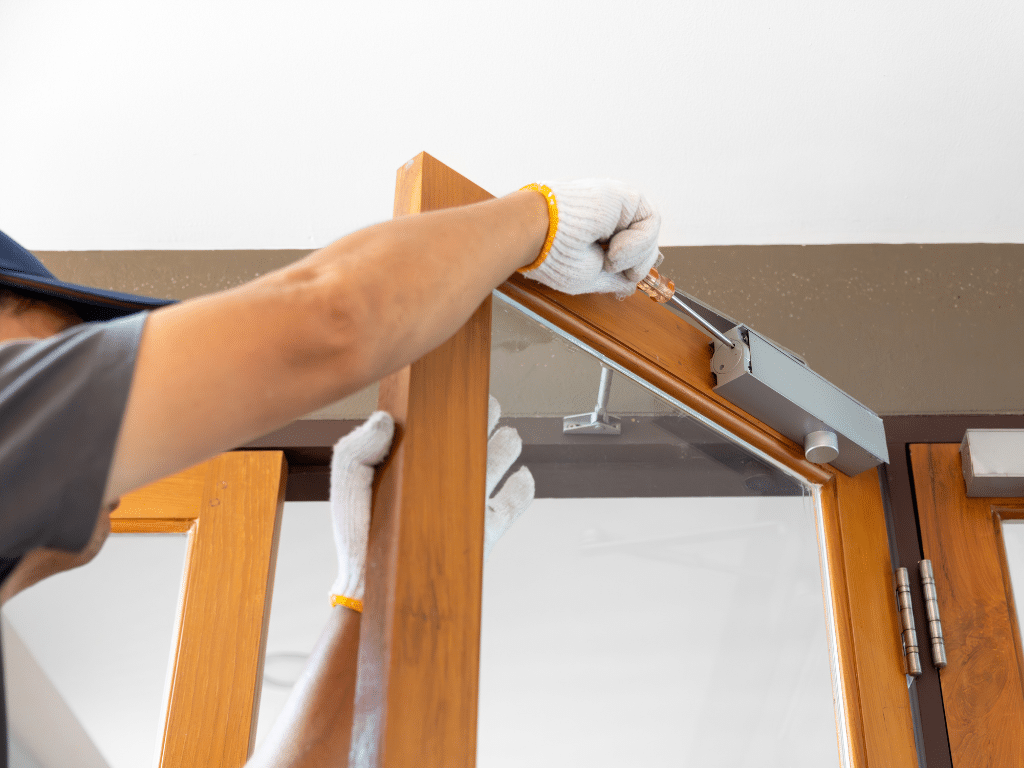
Some entrances allow the door operator to sit on a workable existing header. Others need a custom aluminium frame system to support the track, align the glass, and create a stable installation platform. Older buildings can also present uneven surfaces or weak overhead support that require reinforcement before automation is installed. This is one reason a retrofit job often costs more than a new fit-out in a clean shell unit.
How much does cost change by use case?
Searchers rarely want a price in the abstract. They want to know what a realistic budget looks like for their premises.
Small offices and low to moderate traffic units
If the site already has power nearby and does not need major structural work, smaller office entrances can remain under SGD 7,000. These projects usually work with lighter-duty motors, simpler sensor setups, and a tighter physical span. They are still commercial systems, but they are not carrying the daily cycle load of a busy shopfront or medical facility.
Retail shopfronts
Retail entrances usually cost more because they open and close far more often, and the door has to manage customer flow cleanly during peak periods. Wider clear openings, 10 mm tempered glass, heavier-duty operators, and adjustable hold-open timing are common. Enforce’s current pricing guidance places many retail shopfront systems around SGD 8,000 to 15,000, depending on width and site condition. That is a useful planning range for anyone searching “automatic sliding door price Singapore” with a customer-facing business in mind.
Clinics and medical centres
Clinics sit in an interesting position. They may not have the cycle volume of a large mall tenant, but they often need smoother motion, quieter operation, cleaner user flow, and better control of opening behaviour. Some also need integration with restricted access areas. Enforce’s published range for clinics and medical centres is SGD 7,000 to 14,000, which reflects that blend of moderate traffic and higher functional expectations.
Premium entrances with integrated access control
Once an automatic door is tied into controlled access, the project moves beyond a basic entrance operator. Reader compatibility, door release logic, cabling coordination, and commissioning checks all add scope. That does not mean every access-controlled entrance becomes expensive, but it does mean the quote should be read as an integrated entry system, not just a sliding glass door. Enforce lists access control solutions as part of its wider entry management offering, which is relevant when a commercial door project must work with permissions and restricted zones.
What should be included in the quotation?
A serious quotation should tell you what hardware and labour are actually being supplied. At minimum, buyers should expect clarity on the operator model or performance level, sensor setup, door width assumption, glass thickness, aluminium frame scope, installation labour, testing, and commissioning. Warranty terms should also be stated plainly. If those items are vague, the number on the quotation is not doing its job.
It also helps to separate “included for this entrance” from “possible add-ons.” A quote that lists standard motion sensing but excludes safety beam sensors is not equivalent to one that includes both. A quote that includes the frame but excludes site wiring is not equivalent to one that supplies a complete working entrance. The more line-by-line clarity you get at this stage, the less likely you are to face change-order surprises later.
What is usually excluded from the base price?
The most common exclusions are site wiring, power point relocation, hacking and making good, structural reinforcement, access control integration, backup power options, and removal of old entrance assemblies. None of these is unusual. They just need to be named early. When they are left in a grey zone, the project looks affordable at quotation stage and becomes expensive once installation starts.
This is where a commercial buyer should pause and ask one practical question: “What must already be on site for this quoted figure to remain valid?” That single question often reveals whether the contractor is pricing a real-world installation or a best-case scenario. It is also why a budget prepared from a simple online price list is rarely enough for a live site.
Do regulatory requirements affect cost?
They can, but on a cost page the right way to frame this is simple: compliance-related requirements can change hardware scope. Singapore’s Building and Construction Authority maintains the Code on Accessibility in the Built Environment, which sets baseline accessibility requirements, and SCDF’s Fire Code governs means of escape and other fire safety considerations. If your entrance needs wider clear widths, safer closing behaviour, or fire-related door performance measures, the system specification and cost can change. Code on Accessibility in the Built Environment and Fire Code 2023
That is the point where a generic quote becomes risky. A supplier may be quoting a functioning automatic door, while your project actually needs a door system that satisfies accessibility, egress, or building-specific conditions. Those are not the same thing, and the price difference can be meaningful.
How should you compare quotations properly?
Start with the motor. Ask what duty level is being supplied and whether it suits the expected daily cycle count. Then check the physical assumptions: opening width, glass thickness, and frame scope. After that, look at sensors, site wiring, testing, warranty, and exclusions. If any one of those is vague, the total price tells you very little.
For retrofit projects, ask whether the quotation assumes an existing power point, level surfaces, and sufficient overhead support. For integrated entrances, ask whether access control coordination, reader connections, and logic testing are included. For ongoing cost planning, ask how servicing will be handled after handover. Enforce’s after sales service page makes clear that routine servicing, rectification, and replacement of worn components are part of long-term system ownership, not an afterthought.
How much should you budget for maintenance after installation?
Maintenance contract pricing in Singapore typically sits around SGD 400 to 800 a year for many automatic door systems, depending on complexity and usage. That usually covers items such as track cleaning, roller inspection, sensor recalibration, and safety testing. High-traffic systems may need closer attention than quieter office entrances because wear builds faster under repeated daily cycles.
This is one area where trying to save too much money often backfires. A door that is not serviced can develop poor alignment, inconsistent detection, rough travel, or premature wear in the rollers and moving components. That does not only increase repair cost. It also affects user safety and day-to-day reliability at the entrance.
Conclusion
Automatic door installation cost in Singapore is shaped by specification, not guesswork. Motor type, door width, site wiring, frame scope, and integration all affect the final number.
If you are planning a commercial entrance upgrade, get a quotation built around your actual site conditions and intended traffic load. That gives you a usable budget, a safer installation, and fewer surprises after work starts.
FAQs About Automatic Door Installation Cost Singapore
What is the average automatic door installation cost in Singapore?
For many commercial sites, the starting range is about SGD 4,000 to 6,500 for simpler entrances, while larger retail or custom integrated systems can move past SGD 12,000. Final cost depends on the operator, opening width, glass, wiring, and frame scope.
Does automatic sliding door price in Singapore usually include site wiring?
Not always. Site wiring is commonly priced separately when the entrance lacks a suitable nearby power point or needs concealed cable routing. A proper quotation should state clearly whether electrical work is included.
Why do some commercial automatic door quotes differ so much?
The biggest reasons are different motor duty levels, different glass and frame assumptions, sensor package differences, and excluded items such as wiring or reinforcement. Two quotes with different technical scope are not true like-for-like comparisons.
Does access control integration raise automatic door cost?
Yes, it often does. Once the entrance must work with reader permissions, release logic, and coordinated testing, the job becomes an integrated entry system rather than a standalone door operator installation.
How much does annual maintenance usually cost after installation?
A common range is about SGD 400 to 800 a year, depending on system complexity and usage. Servicing typically covers cleaning, inspection, calibration, and safety checks to keep the automatic door operating reliably.