


Smart Access Control Standards Singapore 2025

Introduction to Singapore’s Smart Access Control Evolution
As Singapore accelerates its Smart Nation vision, 2025 ushers in critical updates to industry standards and security regulations for smart access control systems. In today’s evolving security landscape, property owners and developers must ensure their access control infrastructure not only withstands cyber threats but also complies fully with Singapore’s latest legal and technical mandates.
Traditional locks are no longer enough. Modern systems integrating multifactor authentication, AI-based anomaly detection, and IoT devices now set the benchmark for security and operational excellence. At enforce.com.sg, we provide a clear guide to navigating Singapore’s rigorous regulatory landscape.
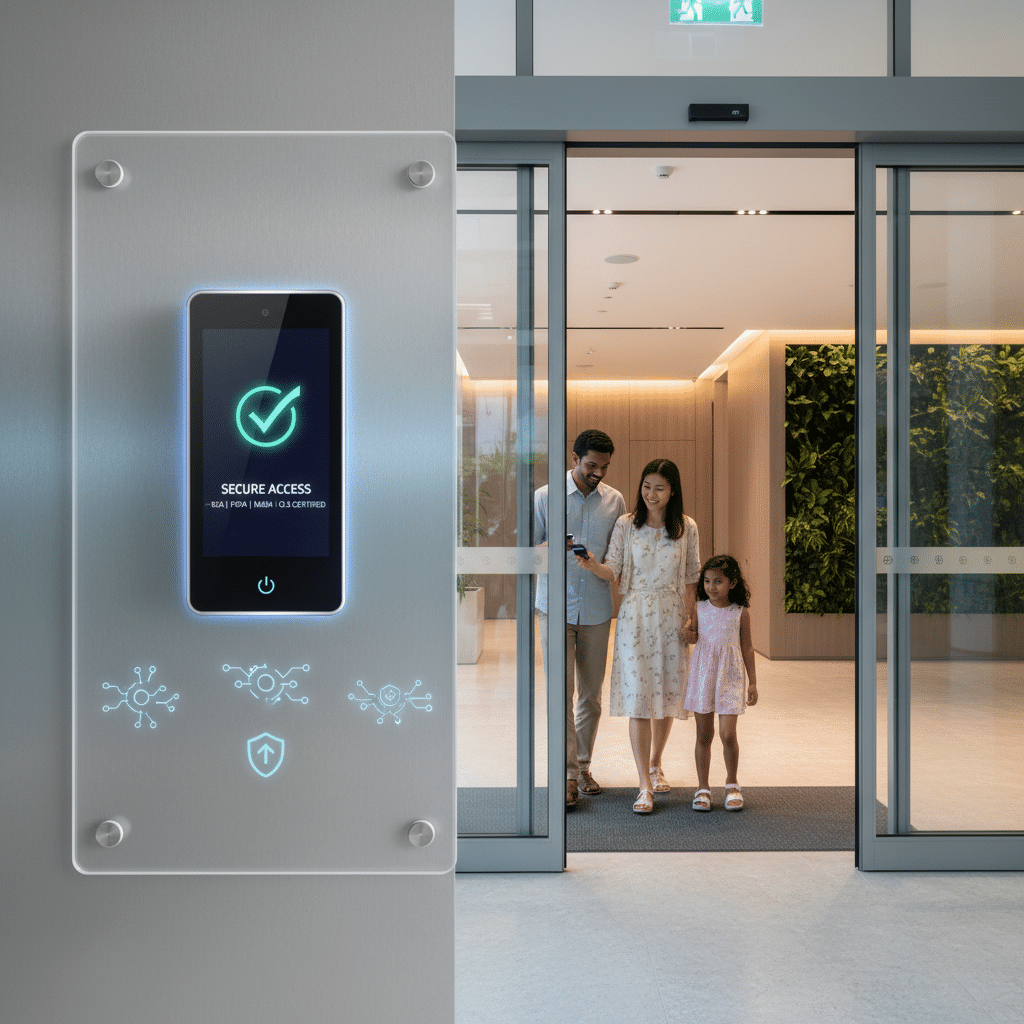
Singapore’s 2025 Regulatory Framework Overview
Singapore’s 2025 regulations place great emphasis on the Cybersecurity Act and Critical Information Infrastructure (CII) obligations. Systems must support multifactor authentication using biometrics, secure tokens, and PINs to eliminate single points of failure. Immutable audit logs are mandatory for physical and digital access, enabling forensic investigations. Additionally, frequent security testing via licensed Managed Security Service Providers (MSSPs) ensures continuous vulnerability assessment.
Compliance with the Personal Data Protection Act (PDPA) is equally vital. Smart access systems collect sensitive personal data, demanding strict adherence to data protection by design principles—minimizing data, encrypting it in transit and at rest, and enforcing strict access controls. Rapid breach reporting protocols further protect stakeholders’ reputation and finances.
Integration of Internet of Things (IoT) devices must align with the Infocomm Media Development Authority’s (IMDA) Cybersecurity Labelling Scheme (CLS). Level 3 and 4 classifications require advanced cryptography, secure firmware updates, and independent penetration testing. This assures device integrity while maintaining national security standards.
IMDA guidelines also promote end-to-end encrypted communication channels, robust device lifecycle management, and network segmentation to isolate access control components. Such measures are key for mitigating operational technology cyber risks.
Best Practices for Smart Access Control Implementation
Best practices extend to holistic system integration—connecting access control with CCTV, HR databases, and alarm management platforms. Real-time centralized logging and cloud-based user management allow scalable, remote oversight, while biometric and mobile credential multifactor authentication greatly reduces credential theft risks.
Artificial Intelligence (AI) is an emerging cornerstone for anomaly detection in access control. Proper adversarial robustness testing and secure retraining protocols ensure AI tools comply with international risk frameworks, allowing predictive security while safeguarding compliance.
Since January 2025, strict legislation prohibits unauthorized alteration of access control software. Only licensed, genuine firmware and software components are permitted to protect against cloning and unauthorized reverse engineering.
Technical Requirements and Physical Safety Standards
Technically, compliant systems must support TLS 1.3 or higher, feature centralized audit logging with tamper alerts, enable auto-updates with rollback, and include physical anti-tamper sensors conforming to Singapore codes. Installation best practices incorporate dedicated operational technology (OT) network segments, firewall deployment, least-privilege user roles, and comprehensive staff training on incident response.
Physical safety also remains a priority. Anti-crush sensors meet building regulations and prevent injury risk, while cryptographic safeguards like short-lived tokens and encrypted protocols secure communications against replay attacks. Insider threats are curtailed through role-based access controls combined with AI anomaly detection and regular privilege reviews.
Partnering with Enforce Automatics for Compliance & Future-Proofing
Partnering with Enforce Automatics means your smart access control solutions meet all local and international standards, delivering AI-enhanced efficiency, continuous vulnerability assessments, and frictionless user experiences. Our scalable cloud infrastructure positions your property for seamless future technology adoption.
In conclusion, Singapore’s 2025 regulatory environment demands forward-thinking, compliant smart access control systems. Trust Enforce Automatics—your expert partner offering consultation, installation, and 24/7 support customized to Singapore’s stringent requirements. Protect your investment, boost security, and streamline operations by contacting enforce.com.sg today for a comprehensive system audit and consultation.